Horror, Papers, SFF

Entering the Ecosystem

I have a new paper out! “Entering the Ecosystem: Human Identity, Biology, and Horror” is in the book Horror and Philosophy: Essays on Their Intersection in Film, Television, and Literature, edited by Subashish Bhattacharjee and Fernando Gabriel Pagnoni Berns, published by McFarland.

I love eco-horror films, especially the animal horror type. I don’t care if it’s mutant bears or giant crocodiles or experimented-on sharks, I always end up rooting for the monster. Let’s be honest: most of the time they’re not doing anything wrong. They’re just wandering around their natural habitat, acting as bears and crocodiles and sharks do, when along comes this meaty little biped, all excited to interfere with them. Of course they’re going to look at us and think food.

This can be deeply destabilising from the human point of view. Dangerous, too, but beyond the being eaten alive or torn apart or what have you is the sense of identity loss we feel at suddenly being booted a few rungs down the food chain. The vast majority of us are used to thinking of humans as somehow separate from the rest of the animal world. We’re smarter. We have science and opposable thumbs and ways to insulate ourselves from the natural world. Animal horror films remind us that we’re not so removed as we’d like to think. That’s so disturbing to watch, and I love it.

Naturally I had to write about it.


Papers, SFF

The Impoverished Landscape

I have a new paper out! My first 2023 paper, and it’s called “The Impoverished Landscape: Navigating Absence and Ecological Resilience in Speculative Fiction.” You can find it in issue 33 of Hélice: Critical Thinking on Speculative Fiction, which is a special issue on speculative landscapes.

I focus on two texts in the paper: Locust Girl: A Lovesong by Merlinda Bobis, and Sweet Fruit, Sour Land by Rebecca Ley. Both books are set in what are increasingly impoverished landscapes, as ongoing biodiversity loss produces an environment that is ever more difficult for humans to survive in. As texts, they are both extremely different. Sweet Fruit is a dystopian realistic piece set in the near-future UK, whereas Locust Girl is a dreamy, magical realist fantasy that is no country in particular, being set in an ambiguous and unrecognisable location that is mostly wasteland. They both, however, engage with landscape in complex and interesting ways, and it’s often interesting to approach the same element from very different directions.

Impoverished landscapes like these often can’t provide sufficient resources for the people living in them to have sustainable and reliable food supplies, for instance. The distribution and allocation of these resources is controlled in unfair and exploitative ways, and the landscapes are often associated, therefore, with deprivation. My paper argues that they can also be interpreted as sites of resistance, and of re-imagined relationships between the human and the non-human.

If you’re not very interested in the paper, or in academic writing, please consider reading the books. They’re fantastic!

Papers, SFF

Image and the Tree in Middle-Earth

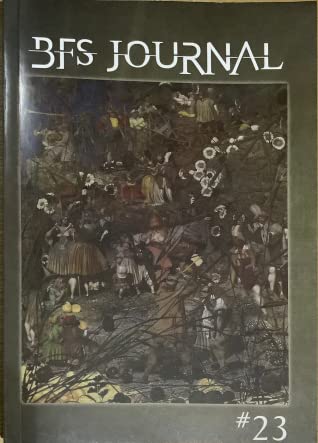
I have a new paper out! “Image and the Tree in Middle-Earth” came out in issue 23 of the BFS Journal. Technically it came out a couple of months ago, but it doesn’t quite feel real as the issue, while posted, hasn’t arrived here yet. It takes an age to send things to New Zealand! (When my most recent book came out, and my Canadian publisher sent me copies, they took five months to get here.) I don’t know why the postal system’s so very slow, but I’d like to post this in the same year the paper was published, so here we are.

I actually wrote the paper over a decade ago, I think, in a class on fantasy literature. It stayed, in its school-draft form, on my hard drive for ages before I decided to pull it out and see if I could make it publishable. I sent it off to the good people at BFS Journal, who have published some of my academic work before, and happily they took it – but they also took it before the new Tolkien tv series came out, so if you’re expecting any mention of that in there, don’t.

It was a fun paper to write, in that my primary research was reading Tolkien over and over again (such a chore!) and I do that anyway, so it was killing two birds with one stone. How tree imagery reflects throughout Middle-Earth, and how it reflects historical tree imagery in Europe, is a particularly interesting topic, at least it is for me, so I’m glad to be able to share it.

Papers, SFF

SA After Apocalypse

I have a new paper out! It’s only the second time I’ve co-written a paper, but this was a particularly easy experience, writing it as I was with Ryn Yee, who is currently a grad student at the Centre for Science Communication at Otago University, which is where I got my PhD. Ryn and I are both big speculative fiction fans, and when we saw that the SFRA Review had a call for papers for a special symposium on sexual violence and science fiction… well, to be honest, I noped out of that one pretty quickly. It’s not a subject matter I was particularly interested in exploring.

But then Ryn and I got chatting, which quickly became ranting, about a shared hatred of that worst of science fiction tropes: repopulating the world after apocalypse. Rarely have I seen this trope handled in an appealing way. More often, it’s used as a narrative “justification” (and I use the term very loosely) to excuse a constant assault on women and girls.

I hate these storylines. Ryn hates them too. If the subject matter didn’t initially inspire us, spite and the opportunity to rip this stupid trope to shreds had us writing a paper that was, I’m happy to say, accepted. The paper, “Sexual Assault After Apocalypse: The Limited Logic of Natural Selection” is free to read with the rest of the symposium articles here. Please read with care, as it’s a horrible topic.

I shall probably never write about it again. Once was enough. I’d happily co-author another paper with Ryn, though, because they were excellent to work with. Thanks, Ryn!

Papers, SFF

Erewhon: 150th Anniversary Edition

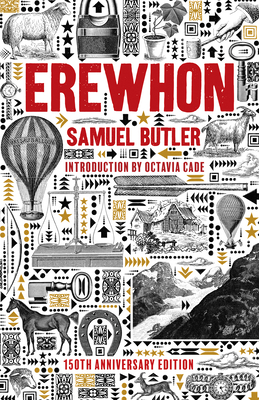
I have a new book out! At least, I have part of a book out. Erewhon Press has just put out the 150th Anniversary Edition of Samuel Butler’s classic utopian text Erewhon, and they very kindly asked me to write the introduction.

Butler came to New Zealand as a young man, and stayed for several years, working on a sheep station and writing articles for the local newspaper, some of which were the germs of what would become Erewhon. Even though he didn’t stay here, the book is very firmly located in the history of New Zealand utopias. Growing up here as I did, and with a long-held love for science fiction, I was aware as a child, albeit dimly, that New Zealand was a place of utopian dreams. (Thank John Wyndham for that. The children of The Chrysalids escaped their fundamentalist community, in the aftermath of atomic war, to come here.)

A lot of the utopian imagery surrounding this country is a product of colonialism. Actually, pretty much all of it is. New Zealand was actively marketed, in earlier times, as a perfect place for British settlers to make a new life. Even over the past few years, as we navigated our way through pandemic, New Zealand was held up as some utopian example of community togetherness.

That utopian perception has always been deeply flawed. We are not a paradise, and we have our own problems, and the creation of a settler utopia bulldozed any Indigenous idea of the same. However, what utopian literature such as Erewhon can do is to critique the idea of paradise. Who is it for? Who is it not for? What issues are there to be overcome? Butler, who was deeply concerned with the idea of a war between humans and machines – and he was at the forefront of genre writing there – decided to explore this. Erewhon was the result, and it is simultaneously confronting and (often) flat-out strange. Some of his ideas are mad. Some are terrible. But they’re worth grappling with, and I’m super pleased to have contributed what I hope is a generally academic, but still readable, introduction.