Papers, Poetry

The Ghosts of Coastlines Past

I have a new paper out! “The Ghosts of Coastlines Past: Eco-Poetry and the Oceanic Ecological Gothic” has been published in volume three of Gothic Nature, which was themed around “Haunted Shores.”

There’s a lot of ways for shores to be haunted. Shipwrecks, for example, and drownings. But I’d been reading a lot of poetry around about the time I sent in an abstract for this, and I was interested in the idea of hauntings that hadn’t yet happened… the hauntings we’re in the process of creating now. That haunting is rather more scientific than spectral. It came out of a news article, too – down in Wellington, where I used to live, are little blue penguins, and they’re lovely wee things. But in a recent breeding season, a third of the chicks died. The cause of death was starvation. The warming waters of the harbour had affected their food supply, and the penguins died. Awful, isn’t it? Climate change is affecting our oceans, so what are our future coastlines going to look like? What absences are we creating, what potential for ghosts?

Some of the poetry collections I was reading addressed this in one or more of their poems, such as Jorie Graham’s Sea Change. Some, like Gabriel Ojeda-Sagué‘s Losing Miami, took a cultural approach, addressing the future loss of entire cities.

The possibilities of future ghosts, I thought, were immense. So I wrote the paper, and the entire issue is free to read online here, should you be so inclined. Thank you to the editors and the poets for their incredible work!

Papers, Science

The Urban Reef

I have a new paper out! “The Urban Reef: Breaking Down Barriers Between Green Spaces in Urban Environments” has been published in Almanac for the Anthropocene: A Compendium of Solarpunk Futures, edited by Phoebe Wagner and Brontë Christopher Wieland, from West Virginia University Press.

One of the things that I most enjoy about the solarpunk ethos is that is starts from a place of optimism. The effects of climate change and of biodiversity loss, for example, have often given rise to visions of the future that are inescapably grim. This presupposes that, as a species, we cannot drag ourselves out of the current spiral of dystopian gloom and creative a more positive future. I don’t think that’s correct. Solarpunk prioritises diverse, sustainable community solutions to our ongoing structural problems, and this anthology gathers together a number of essays and creative pieces exploring such solutions.

Mine’s on how to increase green spaces in cities. No one wants to live in a concrete heap with the rats and the pigeons that are some of the other more visible urban species (apart from ourselves, that is). Well, we don’t have to.

Papers, Science, SFF

Tardigrades and Star Trek

I have a new paper out! “Ethics, Experimentalism, and Hybrid Purpose: Navigating Science and the Military in Star Trek: Discovery” is out in the latest issue of Interdisciplinary Literary Studies. Sometime last year I saw their call for papers for a special issue on hybridity in Star Trek, and as I’m on a mission to eventually write papers on all my beloved books and media, I knew I had to submit to it. And the I remembered the tardigrade storyline of Discovery’s first season. I remembered, as well, the Manhattan Project, a period of science history that I find endlessly fascinating, and I knew how I could lump the two together.

The Manhattan Project had an interesting organisational structure, with two effective heads: General Groves, who represented the military, and J. Robert Oppenheimer, who represented the scientists. This structure was something that could be clearly mapped onto the tardigrade storyline, hence the following abstract:

In “Context Is for Kings,” “The Butcher’s Knife Cares Not for the Lamb’s Cry,” and “Choose Your Pain,” three season one episodes of Star Trek: Discovery, the hybrid nature of Starfleet becomes apparent when its scientists come into conflict with its soldiers. The order to treat a potentially sentient tardigrade-like creature as a military resource, subject to what is essentially slavery and vivisection, makes scientific ethics subject to strategic value. In each episode, a separate pairing between scientist and soldier develops, which both critiques the competing philosophies and acts as a metaphor for historical conflicts of this kind.

Papers, SFF

Worldbuilding in Ursula K. Le Guin

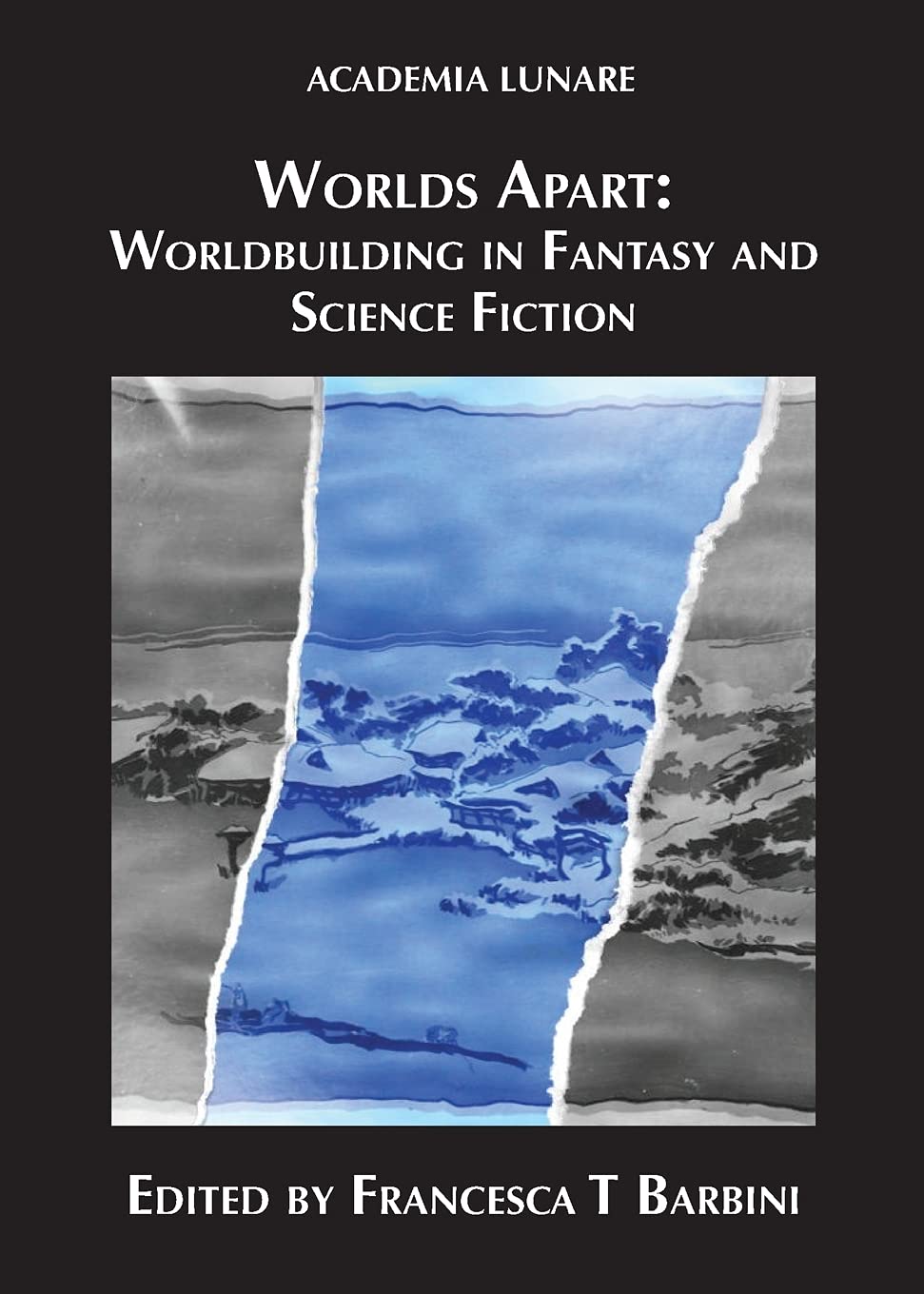
I have a new paper out! “Environmental Change as a Catalyst for Worldbuilding in Ursula K. Le Guin’s Always Coming Home” has just been published. You can find it in Worlds Apart: Worldbuilding in Fantasy and Science Fiction, edited by Francesca T. Barbini for Luna Press Publishing.

I have to admit, Always Coming Home is not my favourite Le Guin book. It’s actually quite far from my favourite. (That will forever be The Tombs of Atuan.) And if I’m being absolutely, perfectly honest, I find Always Coming Home to be over-detailed for my tastes. However, it is an absolutely excellent example of worldbuilding, and one that stems from cataclysmic environmental change. It’s part purported history, part thought experiment, part possible future, and what I find compelling amidst all that welter of detail is just how far the worldbuilding spreads. I mean, I know that in some corners of speculative fiction, writers will rabbit on forever and fucking ever about extraneous bits of encyclopaedia that are only marginally masked as story, but rarely is the focus so broad. Environmental change, in Le Guin, changes everything. Economics, family life, art, science… it’s all affected.

As an academic, that fascinates me. I’m interested in how speculative fiction deals with environmental change, and Always Coming Home is a deeply considered example of it written by someone much cleverer than me. Now, if only it had that creepy labyrinth…

Horror, Papers, Science, SFF

Inoculation and Contagion

I have a new paper out! Something very appropriate for the times, too, in that it deals with infection and disease. The paper’s called “Inoculation and Contagion: The Absence of Vaccination in Bram Stoker’s Dracula” and it’s free to read at Supernatural Studies. If you go to the table of contents for the issue you can also download a free pdf of the paper, which is great.

I love Dracula. I really do. It’s one of the great horror stories of all time, and yet when I reread it again a couple of years back, I began to wonder. Why is there no mention of vaccination in it? Two of the main characters are doctors. They treat vampirism as a contagious disease, and vaccination was, at the time of Stoker’s writing (and at the time the novel was set) an accepted medical practice. It was even a compulsory practice when it came to smallpox. And yet… nary a mention. Not even to say that it wouldn’t work so no use trying. Now, Stoker is long dead and so can’t be asked, but still… can a bit of research find a reason for this curious omission? It just might, I thought, and it has. Without verification from Stoker we can’t be sure if it’s the right reason, of course, but it’s certainly a plausible one.

And honestly, for me, plausibility is enough. My curiosity is satisfied. I would say, however, that just because you can’t vaccinate yourself against vampirism doesn’t mean you can’t vaccinate yourself against a number of other diseases. You can, and you should.