SFF, Short stories

Year’s Best: Pollen and Salt

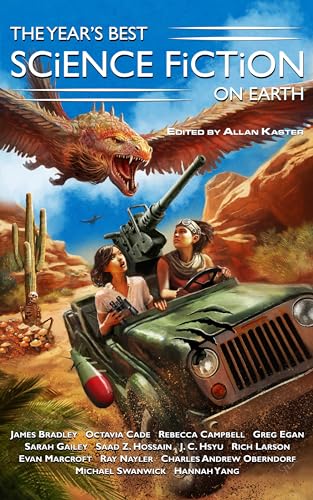
I’m happy to say that one of my climate fiction shorts, “Pollen and Salt,” has been reprinted! You can find it in the inaugural volume of The Year’s Best Science Fiction on Earth, edited by Allan Kaster. I have to admit that even though I basically grew up on Star Trek as the epitome of science fiction, my own scifi is predominantly set here on Earth. It’s not that I don’t still love space travel and alien worlds; it’s just that what’s happening on this world is what I’m most invested in. The changes taking place here, and the changes coming. I’m really pleased to see an anthology that focuses on that, and it’s wonderful to be in it.

I will say, of all the reactions to this particular story, I’m most interested in how people perceive the protagonist. The story’s told by a first person narrator, and they talk about how much they miss their dead spouse, and how affected they are by the changing environment of the salt marsh, but as far as I recall there was no real indication as to the gender of either of the people involved. Every so often a reader reaction or review indicates that they think the protagonist is a man or a woman (I suppose nonbinary would also be a valid interpretation, although I haven’t seen that one yet.) Same with the spouse. Honestly, it doesn’t matter. No matter your gender, you’ll grieve when someone you love dies.

I can’t honestly say that ambiguity was a deliberate choice on my part. I noticed it later, and thought might as well keep it in, but I’m enjoying seeing how people choose to interpret it. I have my own opinion, of course, but there’s no right answer. People can read into it what they want.
Horror, Papers, SFF

A Bold Question and “Frankenstein”

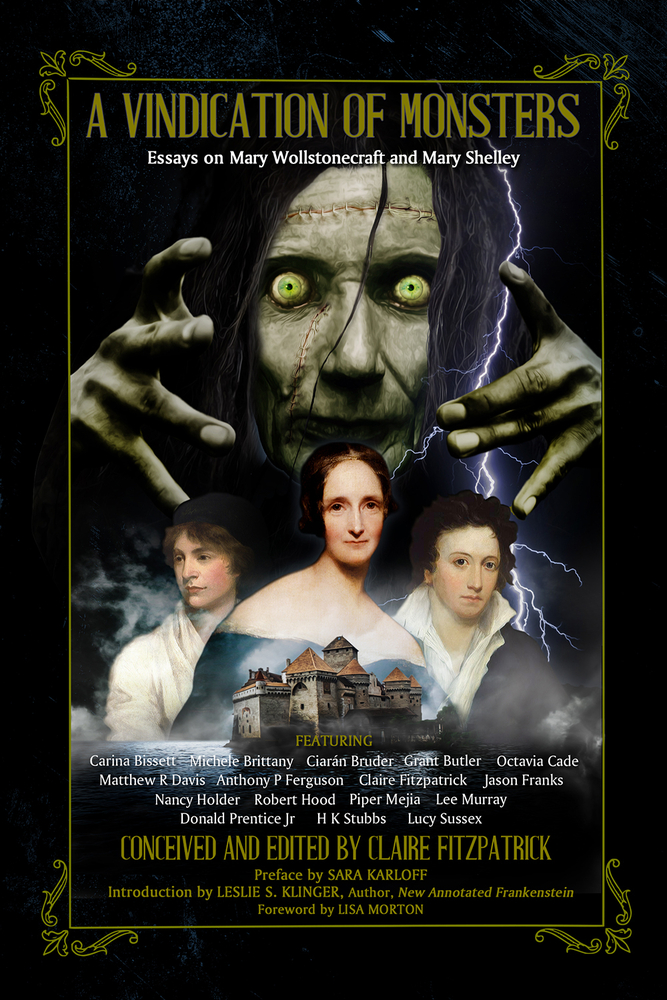
I have a new chapter out! My paper “A Bold Question: Consent and the Experimental Subject in Frankenstein” is out in the book A Vindication of Monsters: Essays on Mary Wollstonecraft and Mary Shelley, edited by Claire Fitzpatrick and published by IFWG.

If you’re a science fiction writer, and I am, or a horror writer, and I’m that too, then you’re likely to have stumbled across Frankenstein at some point. And yes, Shelley wrote a lot of other things but let’s face it: this is the one that everyone knows, the one that stuck. So, unimaginative as it may be, when I saw the call for contributors I went to what I knew: Frankenstein, and science. Because let’s face it: Victor Frankenstein? Is both a very good and a very bad scientist. He’s certainly not that good a man, but let’s stick to the science here.

You can argue that scientific ethics was in its infancy when he was out robbing graveyards and cobbling together the reanimated dead, and you’d be right. You can argue that he had the financial wherewithal to avoid scrutiny and professional oversight, and you’d be right there too. In many ways, genius aside, his practice of science was… debatable. It does, however, make for a fun paper. I had a great deal of enjoyment in writing it anyway, and I hope that you enjoy reading it.

SFF, Short stories

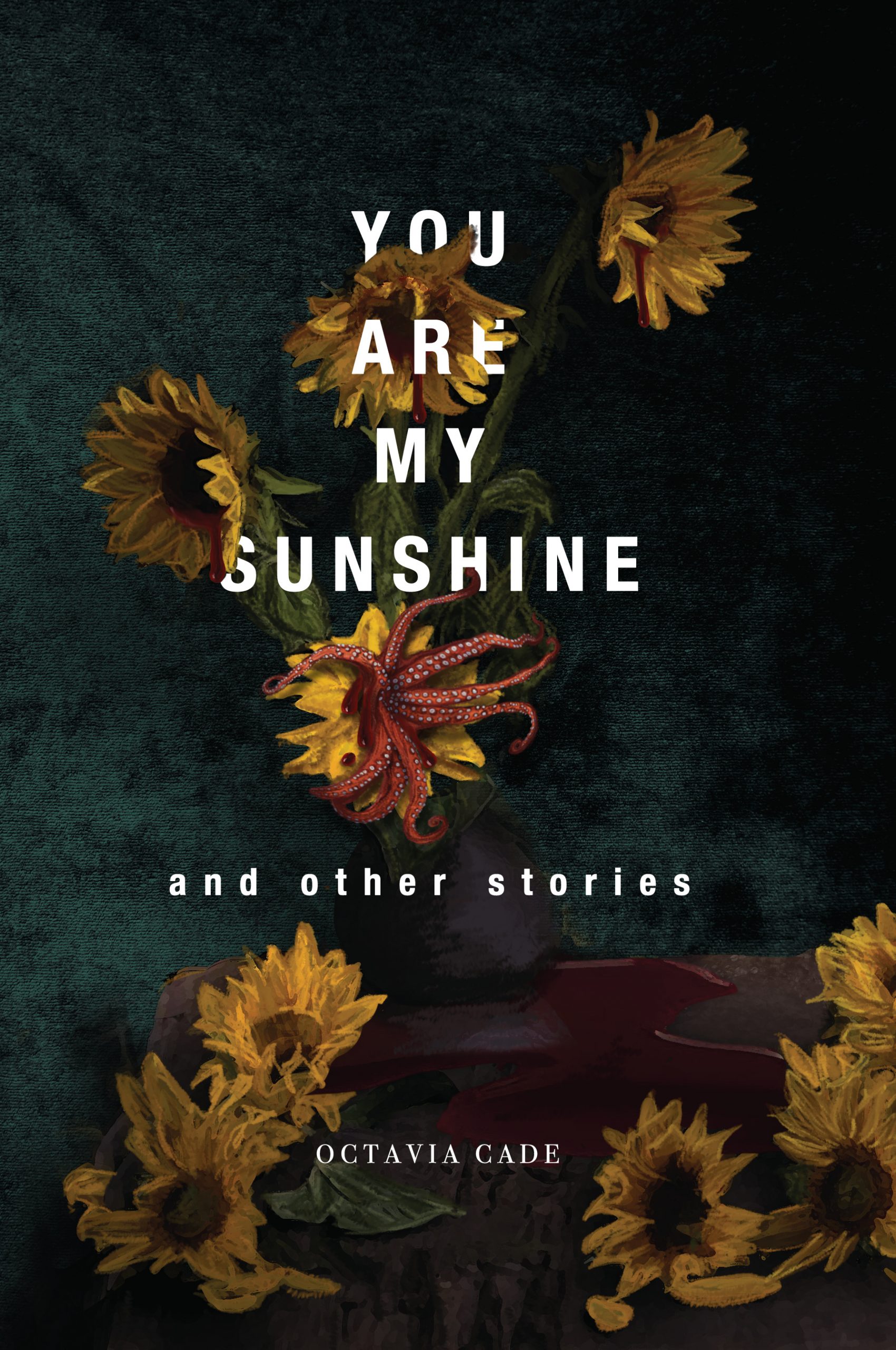
You Are My Sunshine and Other Stories

My new collection is out! You Are My Sunshine and Other Stories, published by Stelliform Press, is available now.

It’s a collection of speculative eco-fiction, ranging from eco-horror to solarpunk. Many of the stories have been published before, and you can read them in places like Clarkesworld (“You’re Not the Only One”) or Strange Horizons (“We Feed the Bears of Fire and Ice”). Have a read of either of these to see if you’ll like what’s in the rest of the book!

There’s also a few stories original to the collection, including the title novelette, “You Are My Sunshine.” This is one of my favourites, because it’s just so weird. It’s set in the same world as my Stelliform novella The Impossible Resurrection of Grief, where in the near-future ecological grief at a degrading environment causes a wave of insanity and suicide. Plus, the novella had jellyfish. Lots of jellyfish. There’s no jellyfish in “You Are My Sunshine” – this time it’s starfish. Zombie starfish, which are a real thing. Sea star wasting disease is spread in warming waters, and it causes the poor starfish to disintegrate… but the bits that fall off keep moving. For a while, anyway. If you’re a marine biologist, as main character Cyrus is, that’s pretty disturbing. Also disturbing are the severed human arms that keep appearing on his property, complete with apology notes. It’s bizarre, but I think it’s also a bit funny.

Stelliform has a fantastic range of books, focused on environmental and climate fiction, so if short stories aren’t your thing, take a look at their catalogue and you’re sure to find something appealing!

Horror, Papers, SFF

Transgressive Reproduction in “Évolution”

I have a new paper out! “Évolution (Lucile Hadžihalilović, 2015) – Transgressive Reproduction” can be found in The Deep, edited by Marko Teodorski and Simon Bacon. It’s one of the Genre Fiction and Film Companions series from Peter Lang, which means it’s basically an excuse for academics to do close readings on their favourite genre films. In this case, genre films connected to the ocean. Anyone who’s ever loved a sea monster will understand the desire to contribute to a book like this!

I saw Simon talking about the book a few years back on Twitter, inviting calls for papers. I do like creepy ocean stories, so I wracked my brain for one that I could pitch a chapter on. I didn’t have to wrack very hard, because I’d recently seen something very weird and very cool. It was Lucile Hadžihalilović’s film Évolution, which was about women who seemed to be part starfish, living on an isolated island with a group of young sons. These sons were adopted, and human, and being used in medical experiments so that their mothers could reproduce in other ways.

The downside was that the film was in French, and while I have schoolgirl French (propped up by daily lessons with Duolingo) it is still very schoolgirl indeed. The upside was that the script was absolutely minimal – for vast swathes of it there was no talking at all – and so I was determined to manage. Partly because the film was weird and cool and I loved it, but partly because the setting struck me as especially interesting. The women and children primarily inhabited the intertidal zone (my marine biology background was excited to be used!) and the navigation of their transgressive biologies could be mapped onto aspects of that environment.

It’s a short paper, but I had fun writing it. If you get a chance to see the film, don’t hesitate! It’s amazing.

Horror, SFF, Short stories

Lise Meitner Speaks to the Living

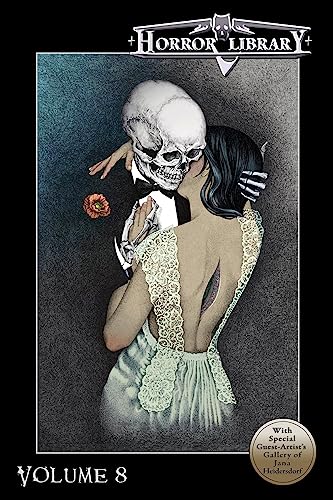
I have a new story out! “Lise Meitner Speaks to the Living” is out in volume 8 of Horror Library, edited by Eric J. Guignard. It’s one of my science history stories, this time about Lise Meitner, who was one of the physicists who discovered nuclear fission. She was invited to work on the atomic bomb in World War Two, but refused on moral grounds. I don’t know how much comfort that would be in the wake of something like Hiroshima and Nagasaki, though… it was still her work being used as the basis for slaughter. That must have been very hard to live with.

In many ways this is a bookend story; the second of a pair. The first of them, “Otto Hahn Speaks to the Dead,” about a chemist who worked on chemical weapons in World War One, was originally published in The Dark.

Meitner and Hahn were friends. Complicated friends, but friends for all that. When push came to shove, one of them went along and one didn’t. That, too, must have been hard to live with. A relationship built on ground seeded with landmines, I think. I wonder how much each of them resented the other, deep down. If they did. (How could they not?)

It was meant to be a two-story thing. Two and done.

I’m not sure that I am done, to be honest.