Articles, Nonfiction, Science

Fact, Fiction, and Feeling

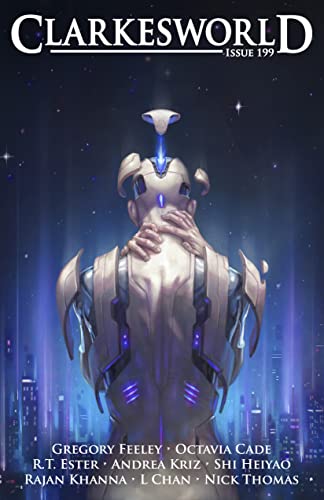
I have a new article out! “Fact, Fiction, and Feeling: Ecological Grief in a Changing World” can be read for free online in the latest issue of Clarkesworld.

A lot of my creative work, over the past several years, has centred around the idea of ecological grief. Climate change and biodiversity loss, as well as other environmental issues, are having increasingly obvious, increasingly visible consequences in the world around us. Often those consequences are marked by absence: species that are disappearing, ecosystems that are altering beyond recognition. When we’re attached to an environment that’s no longer there, or which no longer exists in a way that’s familiar to us… well. It’s a loss, and more and more it’s being recognised as such.

So often, reactions to issues such as climate change are couched in economic or scientific or political terms. These are all valid reactions, but what’s interested me lately is the psychological response: how environmental loss makes us feel. And lately, in both academic and creative literature, that feeling is being explored.

It’s something that I think we’re all going to have to come to terms with eventually.
SFF, Short stories

Happiness

I have another story out! “Happiness” is a choose-your-own-ending novelette that’s free to read in the April issue of Clarkesworld. It’s a bit of an experimental piece, as I’ve never done something of this format before – and it’s deeply, horribly cynical. It may be one of the most cynical things I’ve ever written, and that includes the bears story that was in Strange Horizons a while back.

When it comes to writing about climate, I admit that I bounce between flat-out dystopia and more optimistic stories. I think the optimistic ones may have more value, but there are times when I just can’t resist the former. This is one of those times. “Happiness” is a misnomer. Every ending you choose, you die. You also die happy. Yes, every time. That happy ending tends to be earned, and not in a good way. The unnamed protagonist – and this is a novelette told entirely in the second person, another experimental departure for me! – is honestly not the brightest. Their total lack of awareness, and sometimes even of empathy, means that they never quite realise what’s happening to them, and how their choices, choices that they’re completely certain of, seal their stupid fate. They’re basically a walking Darwin Award, and they never know it. And because they never know it, they die happy, still in the illusion that they’re doing the right thing.

I quite like the choose-your-own-ending format, which is a throwback to when I used to read those types of books as a kid. I think I’d like to try it again one day, but maybe not immediately. Still, it’s good to try new things, creatively, and I’m super grateful that Clarkesworld was willing to let me experiment in their pages.


SFF, Short stories

Border Run

I have a new story out! It came out last month, actually, but I’m still playing catch-up with the blog, so better late than never. “Border Run” is free to read in the September issue of Clarkesworld.

It’s one of a very loosely linked set of stories of mine about life in a world after the ocean ecosystem has almost entirely collapsed. Consequently New Zealand, down at the bottom of the world, has reinvented itself as a place where conservation, particularly marine conservation, is the primary national ethos, and the stories go from there. It’s technically post-apocalypse, I suppose, in that the world these stories take place in is solidly set after global environmental disaster has taken place on an apocalyptic scale, but I wanted it to be an optimistic, cooperative response to apocalypse more than anything else.

That’s less evident in this story, admittedly, as it deals with overfishing. Even now, foreign fishing vessels occasionally turn up in our waters when they shouldn’t, but in a hypothetical world that’s starving due to ecological collapse, such incursions may well be more common. This isn’t a happy story, particularly, but I’m going for thoughtful and nuanced (alongside the killer mermaids) so hopefully that’s worked out to some extent.

SFF, Short stories

You’re Not the Only One

I have a new short story out! “You’re Not the Only One” is free to read in this month’s issue of Clarkesworld. This is the third story I’ve had out with them, and as always I’m very happy to be there.

“You’re Not the Only One” is a quiet little story about picking yourself back up after disappointment and grief. I saw one review of it which said it was barely science fiction at all, and honestly I think that’s a fair assessment. There’s a science fiction veneer, in that one of the disappointments is from an astronaut whose mission has been postponed, but otherwise it’s two friends trying to cope with their own very different challenges, while doing their best to support the other.

I think one of the things that really interests me about it is the sense of collective responsibility. This is particularly evident when it comes to space travel. It’s exciting, and exploration is a valid goal – a necessary goal, even – but how do you justify the use of resources that could arguably be much better spent? How do you get perspective on the relative levels of importance? My astronaut character would be the first to say that his friend, who is dealing with the loss of a child, is undergoing greater challenges. I won’t say it’s hard to feel sorry for yourself when others have it worse, because that’s not exactly true, but then I also think that compassion is not limited to one grief at a time, and it’s possible to navigate one loss while respecting another’s, and to do it with a bit of dignity. So, it’s a very quiet story. There’s a lot of gardening in it. And a lot of kindness too, I hope.

Novels, Science, SFF, Short stories

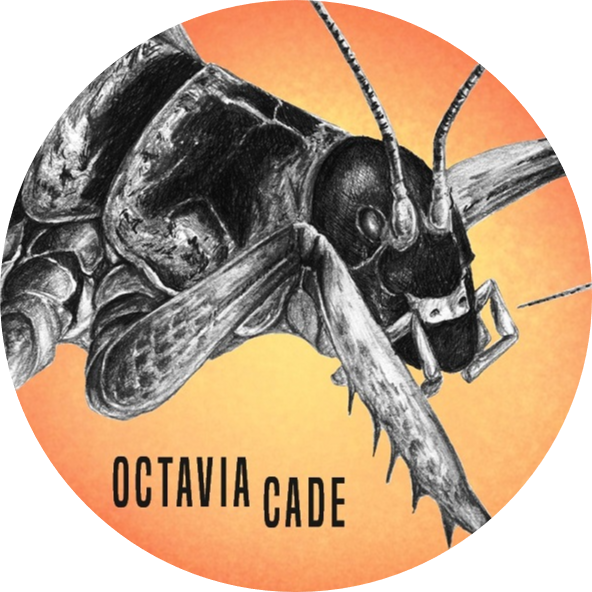
The Stone Weta

I’ve a new story out! “The Stone Weta” is free to read in this month’s issue of Clarkesworld.

It’s one of my favourites of the stories I’ve written – although, to be fair, the new and shiny ones tend to be my favourite at any given time. But this one is special. Partly because it deals with science denial, which can always exercise me to ranting, and partly because although it started as a short story, it very quickly became apparent to me that this was a short story I could build a novel around. And so I am: my current writing project (one of them, anyway) is a sort of sci-fi thriller set in this world, and around this issue.

“The Stone Weta” is about climate change, and how scientists can work to preserve data that governments want deleted or repressed. It’s a fairly topical subject at the moment, given the pressure put on organisations such as the American EPA and the Australian CSIRO when it comes to climate science. And in this story, an underground network of women scientists are smuggling data, stashing it in different places around the world in case it disappears from where it shouldn’t. And they take the code names of weird natural creatures, these women, because that’s what they study and the lessons of biological survival given by these species are an inspiration for keeping resistance alive…

Hemideina maori

In winter, the mountain stone weta crawls into crevices, into cracks in the stone and it squats there, waiting. It is a creature of summer days and winter strengths, of cryogenic hibernation. When the world freezes about it, becomes a stretch of snow and ice and darkness, the stone weta freezes solid in its bolthole. Eighty-two percent of the water in its body turns to ice; the weta is climate in a single body, it is a continent broken off and geology made flesh.

When the weather warms the weta thaws, resumes its life amidst the stone monuments of the Rock and Pillar range…

Please check it out! And keep an eye on your elected officials, because some of them wouldn’t recognise the scientific method if it fell on them from a great height (or entrapped them in a poisonous circle of gympie gympie).