Horror, Papers, SFF

Entering the Ecosystem

I have a new paper out! “Entering the Ecosystem: Human Identity, Biology, and Horror” is in the book Horror and Philosophy: Essays on Their Intersection in Film, Television, and Literature, edited by Subashish Bhattacharjee and Fernando Gabriel Pagnoni Berns, published by McFarland.

I love eco-horror films, especially the animal horror type. I don’t care if it’s mutant bears or giant crocodiles or experimented-on sharks, I always end up rooting for the monster. Let’s be honest: most of the time they’re not doing anything wrong. They’re just wandering around their natural habitat, acting as bears and crocodiles and sharks do, when along comes this meaty little biped, all excited to interfere with them. Of course they’re going to look at us and think food.

This can be deeply destabilising from the human point of view. Dangerous, too, but beyond the being eaten alive or torn apart or what have you is the sense of identity loss we feel at suddenly being booted a few rungs down the food chain. The vast majority of us are used to thinking of humans as somehow separate from the rest of the animal world. We’re smarter. We have science and opposable thumbs and ways to insulate ourselves from the natural world. Animal horror films remind us that we’re not so removed as we’d like to think. That’s so disturbing to watch, and I love it.

Naturally I had to write about it.


Horror, SFF, Short stories

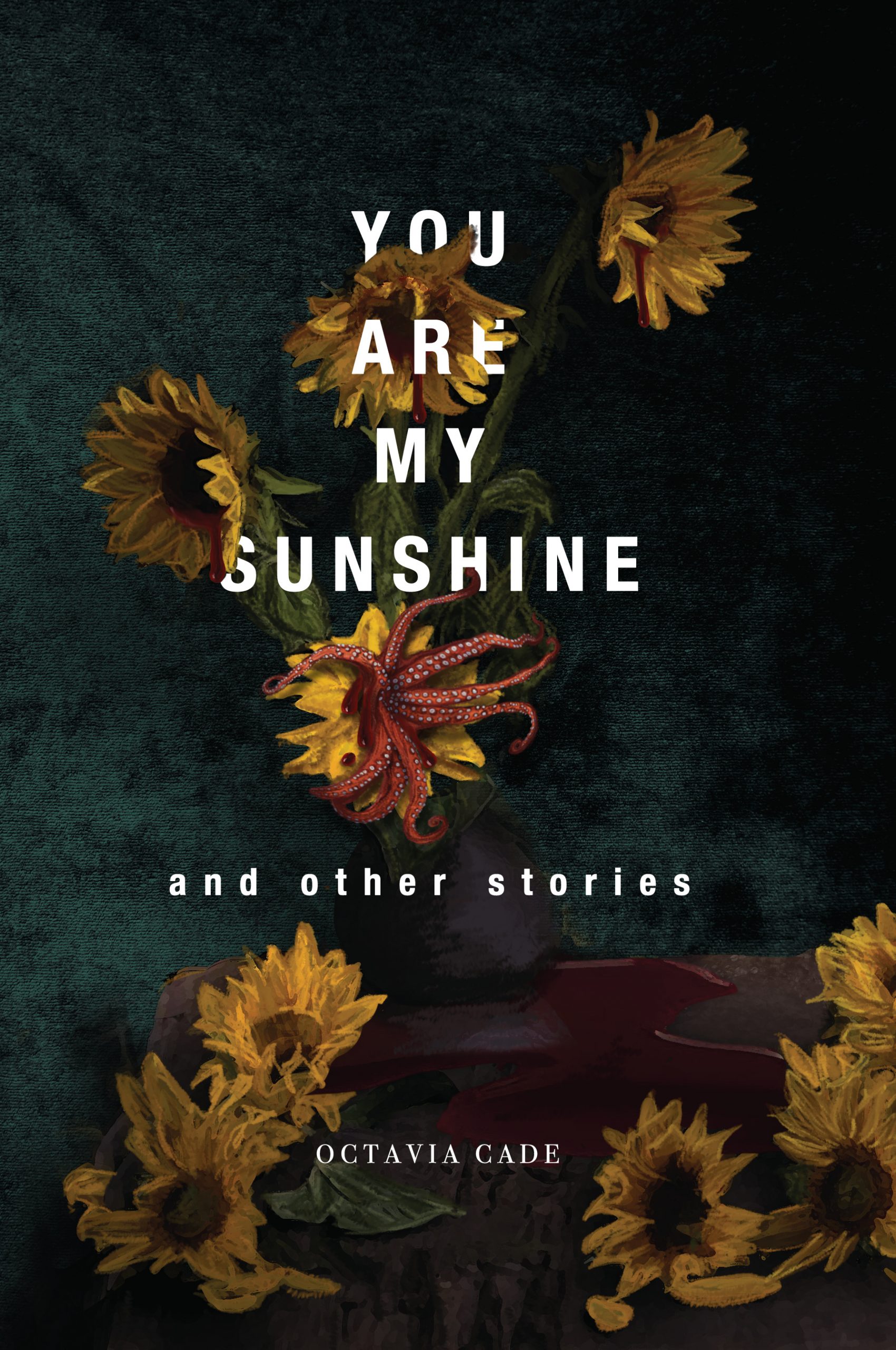
Cover reveal for You Are My Sunshine

My second short story collection, You Are My Sunshine and Other Stories, is out in September from Stelliform Press! I’m really happy to say that the cover is done by the wonderful Rachel Lobbenberg, who did my last Stelliform cover, for The Impossible Resurrection of Grief. I love Rachel’s work – it’s always so detailed and creepy, and the tentacular sunflower here is the perfect example of this.

You can pre-order the book here. If you like eco-horror and solarpunk and the journey from one to the other, this collection might be for you. Behold the blurb:

Sometimes change can hurt. This collection of short stories traces the growing pains of a new world, beginning with the death throes of our current way of life and ending with a world transformed by science and technology, and by grief, hope, love, and humanity’s will to transform. This is a collection that will both tear you apart and tend to your wounds. Cade’s stories are informed by science, tracing the biological and emotional threads that bind us, human and non-human alike. You Are My Sunshine and Other Stories is a promise of what worlds are possible if we allow ourselves to change.

Horror, Short stories

This World Belongs to Us

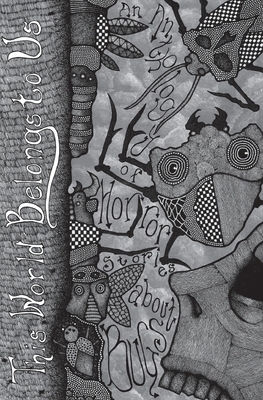
I have a story out in a new book! Not a new story, but I was pleased to get it in anyway. “Imago,” my creepy-girls-and-cicadas-in-a-dead-end-mining-town horror is out in This World Belongs to Us, a bug themed anthology recently published by From Beyond Press. Just look at that cover: it’s by Jacob Blanchet and it’s fantastic.

This is a horror anthology. Now, I like insects – most of them, anyway – so I’ll be one of the first to say that bugs don’t have to be horrifying. They’re still fun when they are, so when I saw the call for submissions for this book I knew that I had to send in something. I was working on a story about insects in a haunted house at the time, but eventually I had to admit that it was never going to be ready in time. (It’s still not ready. That draft is dreadful. There’s something wrong with it but I don’t know what, so it’s staying in draft form for a while longer until I know how to fix it.) Luckily for me, the anthology was open to reprints, and so I had a back-up ready to go. “Imago” was originally published in Three-Lobed Burning Eye, but I’m so happy that it’s now available in a book entirely devoted to horrifying bugs.

If you like your creepy things to crawl as well, you’ll like this anthology. Please go take a look!

Horror, SFF, Short stories

Chickenfoot

I have a new story out! It actually came out a couple of months back, but I’m still playing catch-up here. “Chickenfoot” is available to read in the anthology Into the Forest: Tales of the Baba Yaga, edited by Lindy Ryan from Black Spot Books.

When I saw the call for stories for this I knew I had to send something in. Not, I have to admit, because I’ve got any great love for Baba Yaga. But her house… that’s different. I’ve always found the house fascinating! The way it stalks about on its chicken legs. Any why a chicken? Let’s face it, hens have many marvelous qualities, but if I’m going to stick bird legs on a house a chicken is not the animal that immediately comes to mind. (What does come to mind? I’m not even sure. I suppose it depends what kind of environment the house is traveling through. If it’s swampy you’d want a water bird, and so on.)

That’s what inspired the story. The chicken in “Chickenfoot” is dead, and Baba Yaga’s looking for a replacement. She keeps a diary of her experiments, and they do not go well.

“Chickenfoot” isn’t a very long story; it’s not that much bigger than a flash, I think. I’m tempted to keep going with it, however… add more birds, and more creepiness, and bring out the backstory of the chicken. A project for the future, maybe.

Horror, SFF, Short stories

Breathless in the Green

I have a new story out! “Breathless in the Green” is available to read in the latest issue of Fantasy & Science Fiction. It’s the second story I’ve sold to them, and very pleased I was to do it.

“Breathless in the Green” came about because I was looking to write a story about a water monster, possibly using folk tales to do so. And I came across the figure of Ginny Greenteeth, a sort of water hag that hangs round the ponds and stagnant waters of England, pulling kids into the water and drowning them. Now, I’d heard about Ginny before, in the very vaguest sort of way, but what I didn’t realise – and what caught my attention, and made me want to write a story about her – is that “Ginny Greenteeth” is also used to describe duckweed, which is that small, scummy-looking green plant that covers over ponds. You can see where the connection came from. Duckweed could hide how dangerous a body of water is, and a curious child might not take enough care and drown. Over time, such a thing is attributed to the water hag, which is interesting in itself, but duckweed has one particularly stellar property. It’s great for bioremediation, which means it can filter pollutants out of the environment around it.

It’s a very environmentally friendly weed, is what I’m saying… which leads to a very environmentally friendly monster. Oh, the Ginny Greenteeth of my story still wants to drown things, but this time she’s found a friend… a little girl who is sick of going on climate marches because they don’t achieve anything.

There’s a water hag who just might be able to remedy that inaction.