Papers, SFF

Sacrifice in Susan Cooper’s “The Dark Is Rising” Sequence

I’ve a new paper out! And it’s on a book series that is close to my heart: The Dark Is Rising series by Susan Cooper, which was the fantasy staple of my childhood. I don’t know how many times I read The Grey King as a kid, but it was a lot. I think as an adult it’s been replaced by The Dark Is Rising volume as my favourite of the series, but it’s a close thing. I still read through all five books at least once a year, generally around Christmas, and I always get something new out of them.

You can imagine, then, just how thrilled I am to have a paper out on it. Cooper’s got some really interesting examples of sacrifice that pop up over and over again in the series, all of them quite distinct from the others, and that’s what I look at in my paper. “Sacrifice in Susan Cooper’s The Dark Is Rising Sequence” is out in issue #19 of BFS Journal. It focuses on what exactly makes a sacrifice: how knowledge and intent work together (or don’t) to form different types of sacrifice, and how the sacrifices made differ between mortal and immortal figures.

We’re used to seeing grand sacrifices in fantasy literature, but so much of the story Cooper tells hinges on the small quiet choices of characters like Jane Drew and John Rowlands, and for me these are often more compelling. These two characters are particularly small and mortal compared to the more supernatural, the more mythological, figures in the text, and it stands to reason that their actions are comparatively small and human, but they’re no less effective – and no less crucial – for all that.

Papers, Poetry, Science

Nature as Creative Catalyst

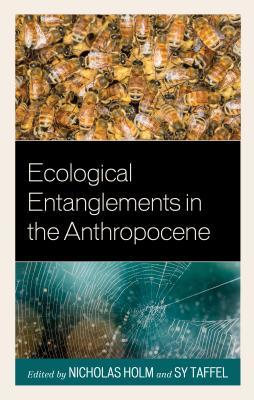
entanglementsI’ve a new book chapter out!

Actually, that implies there was an old book chapter. Nope! There’ve been a handful of papers, but this is is the first academic chapter I’ve had published. It rejoices in the name of “Nature as Creative Catalyst: Building Poetic Environmental Narratives through the Artists in Antarctica Programme”, and it is riveting stuff I tell you.

But if you think that title’s a mouthful, have a look at the collection that it’s in: Ecological Entanglements in the Anthropocene, edited by Nicholas Holm and Sy Taffel. Perhaps it’ll all be a bit clearer when I tell you that the working title of the project, for most of the time I was involved in it, was Working With Nature. Basically, it’s a collection of essays on the many different ways that people interact with their natural environment. Aside from mine, there are chapters on photographing the Australian landscape, suburban landscapes, postcolonial property rights in New Zealand, and more. The focus does tend towards the Antipodean, but it’s not the only setting explored.

My own chapter looks at New Zealand’s Artists in Antarctica programme. Every year, artists are sent down to Scott Base, to live and work with the scientists there. This is done in order for artists to communicate the Antarctic environment to the general public, in different ways than the scientists do. Basically, to give a more well-rounded experience of the continent to said public, who let’s not forget are the ones paying for NZ’s research programmes on the ice. The more invested the public is in Antarctic conservation and science, the better – at least as far as I’m concerned. Selected artists may be writers, film-makers, visual artists, textile artists, musicians, and so on. Being a poet myself, I focused on the visiting poets and how they built environmental narratives of their experiences.

I’m not going to lie, one day I’d love to be part of the Artists in Antarctica programme myself. Still, until that happy day, I can at least appreciate the work of the poets who have been able to go thus far… namely Bill Manhire, Bernadette Hall, Chris Orsman, and Owen Marshall. Lucky, talented bastards.


Papers, Poetry

Agency and the Consequences of Creation

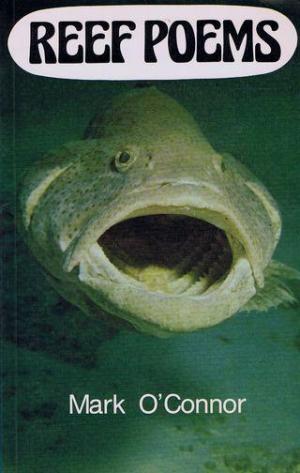
reef poemsI’ve a new paper out! “Agency and the Consequences of Creation in Mark O’Connor’s Reef Poems” has recently been published in volume 23, issue 1 of ISLE: Interdisciplinary Studies in Literature and Environment. It’s free to read at the above link.

Reef Poems can be quite hard to find these days, but if you can track it down it’s well worth it. An absolutely fantastic collection by the Australian poet Mark O’Connor, who very kindly granted me permission to quote from his poems in my paper. I can’t emphasise enough how much I enjoyed this collection – it’s sad and enraging and funny all at once, with touches of the speculative throughout. And given the ever more dreadful state of the Great Barrier Reef in general, any piece of writing that comes down hard on its side is to be supported, so look out for Reef Poems if you can, you won’t regret it! (And if you ever have a chance to support the GBR in a more tangible way, please do. It’s an extraordinary ecosystem that should be protected at all costs.)

Anyway, here’s a taster for my paper:

In 1972, the Australian poet Mark O′Connor (1945–) got a temporary job as a scuba diver at a scientific research station on the Great Barrier Reef. “All I could draw on,” said O′Connor, “was a certain amount of biological knowledge, which I was pulling in hand-over-fist from the scientists. But I had those two essentials for poetry: time and solitude to brood on what I saw” (“The Poetry of the North” 26). Four years later, his first collection, Reef Poems, was published. Since then O′Connor has established himself, alongside writers such as Judith Wright, John Kinsella, and Peter Minter, as one of Australia’s foremost ecopoets. O’Connor shares with Wright not only a history of environmental activism, but also the perception of a “rift that alienates humans from the biosphere” (Platz 259). This alienating rift places humanity as separate from that biosphere instead of part of it, and O′Connor’s desire to close the gap, to drag together and reconcile, is shared by such ecopoets as the Australian Susan Hawthorne, who comments that “Our planet like us is a living system… This is not a romantic idea of mine, it is metaphoric, but no less real for being so” (95). But desire for reconciliation does not make reconciliation, and O′Connor goes on to illustrate, in some of his Reef Poems, a world where the rift between humanity and the biosphere is ever widening….


Horror, Papers

Sifting Science: Stratification and “The Exorcist”

exorcistI’ve a new paper out! “Sifting Science: Stratification and The Exorcist” has recently been published in the latest issue of Horror Studies.

I’m a big horror fan, and The Exorcist has long been my favourite horror film. (It tends to be one of those films I watch when I get sick, on the grounds of I-might-have-a-cold-but-it-could-be-worse.) And that weird prologue has always struck me. It’s the same with the book. The archaeological dig just seems so removed from the rest of the story.

But it isn’t! I’ve made connections! Lots of them.

Because of my background in science communication, I tend to keep an eye out for sciencey-stuff. One of my particular interests is how science is presented in popular culture. So I started thinking about archaeological methods, and the point of including them in a story about demonic possession and pea soup vomiting and the problem of evil, and suddenly that prologue started to make a whole lot of sense. I guess it did to at least a couple of people in peer review as well, because no-one tossed my explanations back in my face and said Are-you-mad?-What-is-this-bollocks? so here it is, my first academic publication on horror.

And there’s not even any spider-walking in it.

Papers, Poetry, SFF

Paper: ‘I Close the Mima’…

2015-2My latest paper has recently been published! “‘I Close the Mima’: The Role of Narrative in Harry Martinson’s Aniara” is out in volume 54, number 2 of Scandinavica. It should be available for free on their website soon; I’ll put a link under the Papers tab when it is, in case anyone’s desperately interested in reading it. Though if you’re into sci-fi, I’d definitely take a look at the source material. It’s a fascinating book-length poem about the dangers and isolation of spacecraft…

Abstract:

In 1956, Swedish writer and Nobel Laureate Harry Martinson published an epic science fiction poem, Aniara, about a spaceship thrown off course and dooming its passengers to an eternity of deep space travel. Aboard was also the Mima, an artificial intelligence that eventually committed suicide out of despair. The Mima is generally perceived to be a mimetic construct, but this article also interprets her in the form of a personified narrative: when the Mima dies, both the community aboard the Aniara, and the structure of the poem itself, breaks down into individualised constituents.

It’s the first paper of mine to focus on a science fiction text. Hopefully not the last!