SFF, Short stories

Resilience

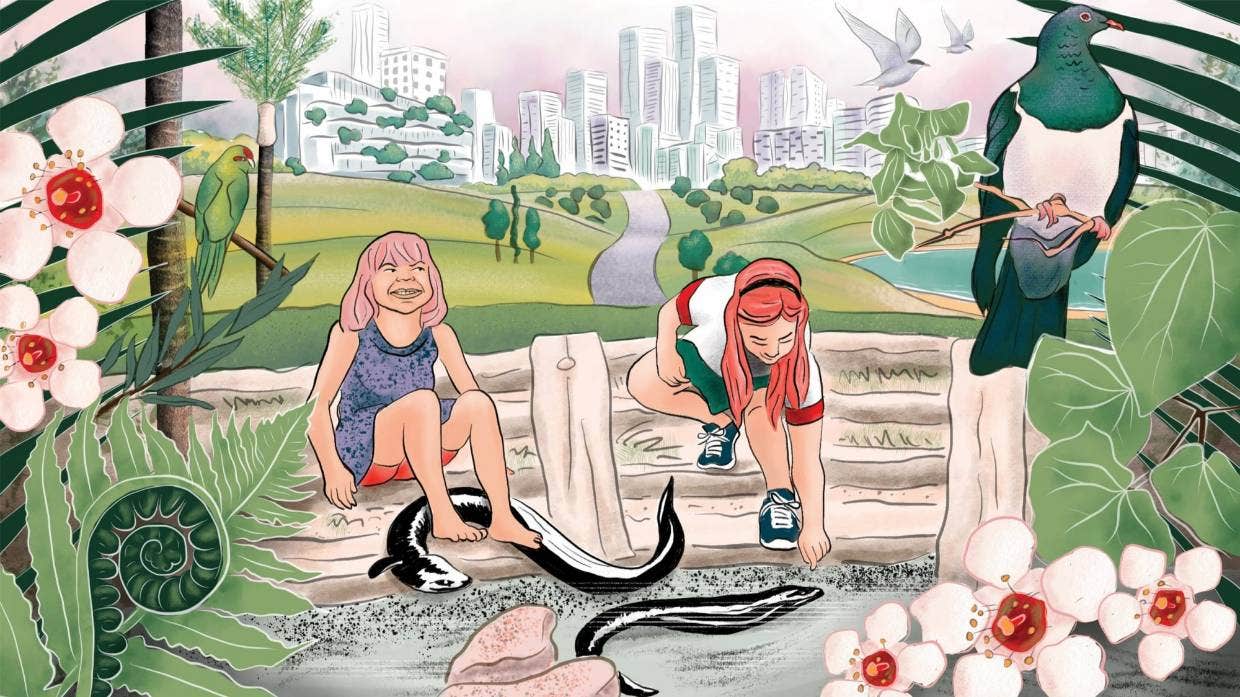
I have a new story out! “Resilience” has been published by Stuff, and is free to read at the link there. It’s the second in a series of cli-fi shorts commissioned by Stuff, so it was a lovely surprise to get that email from them. They said they were looking for a more positive story about the future, and how it might play out in a changing climate. They also said it had to be family friendly, which I admit gave me brief pause. (There’s often more than a touch of horror in my stories, and so when I heard “family friendly” my first reaction – thankfully internal – was “No killing characters off this time, then.”)

So I came up with this story about two kids, Coral and Elsbeth. I reckon they’re about ten years old. Anyway, they meet each other one summer day and run off to play hooky, messing about on the beach and discovering the nesting sites of some very special birds. The emphasis on conservation is going on in the background, really, with the urban landscape they live in having undergone an enormous ecological makeover. Increased biodiversity increases resilience, remember, and with climate change likely to inflict significant disturbance on our ecological systems, supporting biodiversity in our environments is one way of building healthier and more sustainable ecosystems.

And there’s some art to go with it too. Isn’t it pretty?

SFF, Short stories

Black Dogs, Black Tales

Oh, playing catch-up on the posts I should have made…

Anyway, I have a story out! It’s not a new one, but it’s been reprinted in an awesome charity anthology, Black Dogs, Black Tales, which is benefiting the Mental Health Foundation of New Zealand. It’s subtitled Where the Dogs Don’t Die, so don’t worry about turning the page and finding poor Cujo. Some of the tales in here are pretty grim, but the dogs survive so that’s the main thing.

My story, which the editors Tabatha Wood and Cassie Hart kindly included, is “The Feather Wall,” which was first published last year in Reckoning. The dog in this story – cleverly called Dog – is one of those service animals trained by the Department of Conservation to protect our native birds. In this case, the kākāpō: a flightless parrot native to NZ which is teetering on the brink of extinction. It’s basically kept alive on offshore islands which have been stripped of introduced predators like rats and stoats. Anyway, “The Feather Wall” is a post-apocalyptic story wherein a man and his dog keep up their conservation work, because kākāpō are worth protecting even if the world has gone to shit. They really are! Anyway, if you’d like to read the anthology and support a good cause, the link’s above. 

SFF, Short stories

Otto Hahn Speaks to the Dead

I’ve a new story out! “Otto Hahn Speaks to the Dead” is free to read at The Dark. It’s lovely to have another story with them – they’re a market I really enjoy.

“Otto Hahn” is one of my science history stories. I’ve a particular interest in writing these, and I’ve always found the science that took place during the World Wars particularly fascinating… mostly because of the ethical issues that result from both gas and atomic warfare. Otto Hahn had the opportunity to work on both. In WW1, he worked with Fritz Haber to weaponise chlorine gas, which honestly is something I find very hard to forgive. It’s tempting to think that he learned from the consequences of his actions, however, because when WW2 rolled round and he had the chance to work on researching the atom bomb (for the Germans, as opposed to the Manhattan Project) he ultimately refused to do so.

Interestingly, as a German scientist he helped his colleague, Lise Meitner, escape the Nazis – as a Jewish scientist, she was certainly in danger from them. Meitner, who with Hahn discovered the process of nuclear fission, was offered a place on the Manhattan Project as well. She refused, on moral grounds. I’ve been thinking of doing another story about her to bookend this one, mimicking its structure and theme.

Anyway, take a look at it and see what you think.

Horror, SFF, Short stories

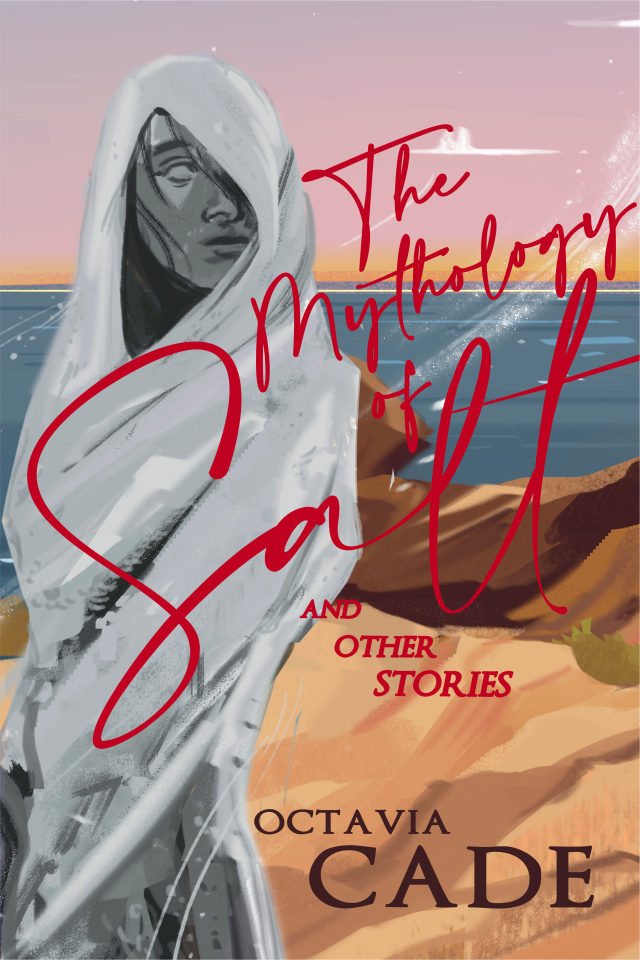
Pre-order: The Mythology of Salt and Other Stories

I have a short story collection coming out! The Mythology of Salt and Other Stories is my debut collection, and it’s coming from Lethe Press in late summer 2020. You can pre-order a copy here!

I’ve had close to 50 science fiction, fantasy, and horror short stories published over the last few years, and this book collects about 18 of them – primarily the stories that deal with the intersection of women, myth, and knowledge. Some of the stories in here have been published in well-known markets such as Strange Horizons and Shimmer, but some went to very small and now difficult to source places, and two are entirely new.

I’m particularly excited that this collection is reprinting “Cuckoo”. It’s one of my earliest stories, and it remains one of my very favourites. It’s a vampire story, which is not something I generally write – this may be my one and only vampire story ever – but it’s an interesting creepy mash-up of myth set in the kauri gum fields of 19th century New Zealand. Of the new stories, one of them “The Knife Orchard,” deals with a piece of fairly disturbing family history, while the other, “In the Shadow of Yew Trees” is a labyrinthine coming of age story set at Bletchley Park during WW2.

So please pre-order if you’re interested, or if you’ve liked my stories in the past! I mean, just look at that lovely cover. Don’t you want it on your shelves?

SFF, Short stories

Our Flesh was Bred for This

I have a new story out! “Our Flesh was Bred for This” is in the first issue of Frozen Wavelets, which is free to read at the link.

It’s a flash story, which is unusual for me. I find flash to be exceptionally difficult to write – every time I try, it tends to balloon out to my natural length, which seems to be around 3500-4500 words. I do not have the gift of concision, is what I’m saying, though I do admire it in others. Every time I see a really good flash piece by someone else, I try to study it to see why they’re managing it and I can’t. I think, finally, that it’s down to a ruthless sense of scale. With such a limited word count, there’s no room for tangents, or even for pretty language that serves no purpose other than prettiness. It’s far closer to a vignette, for me – something designed wholly around a feeling rather than an ongoing plot. Anyway, this is mine. I don’t know that I’ll write a whole lot more of them in future, but I’m glad to have achieved a successful flash, even if it’s just the once. And here’s a taster of it:

Death is different for island folk.

It’s an old saying, if not a truthful one. There are islands enough for carnivores. On Kodiak they stake you out for bears, on Komodo you’re left for dragons. Not everywhere is barren of hunting teeth. In most places they’ve come back, feed them up so carefully as we do.

But there are some islands where they never were. Islands of birds and bats, and the only big carnivores are marine, their fish-bellies white around the coast, their easy length swum up along estuaries and into rivers. The great hinged jaw of leopard seals, the smooth sleek lines of blackfish.

Apex predators, all of them…