Horror, SFF, Short stories

Seedling

After seven years of submissions, I’m delighted to say that I finally, finally, have a story in Fantasy & Science Fiction. It has taken a long time, and some of the stories I sent there were very good and were published in other markets, but F&SF is one of those bucket list magazines for speculative writers, and they get a heap of excellent stories every single day, so it’s no surprise that it takes persistence to succeed there. Well, persistence I have.

The story that finally got me there was a flash piece about fairy tales and cake. “Seedling” was inspired by the Hansel and Gretel story, which has the dubious distinction of being one of the fairy tales that has typically interested me the least, as well as being the fairy tale that most inspired every childhood birthday cake. My parents had the old birthday cake book from Women’s Weekly that every New Zealand family had at one point, I’m sure, and there are a lot of delightful cakes in there but, as a kid, nearly every year I picked the gingerbread cottage because it had a roof covered in Pebbles and the whole thing was just marvelous. That’s about the only thing I care about in the Hansel and Gretel story: that cottage made of cake, like a sugary angler fish in the middle of the forest.

Except in this story, it’s not the cottage that’s made of cake. Because if you’re trying to camouflage predation in a forest, surely a better option is baumkuchen…

I never had baumkuchen for a birthday cake. It’s on my baking bucket list, though.

SFF, Short stories

Metamorphosis

I have a new story out! And it’s basically a love letter to insects. You can find “Metamorphosis” in the latest anthology from Parsec Ink, Triangulation: Habitats. When I saw their call for stories themed around sustainable housing, I knew it was an anthology that I wanted to submit to.

Sustainable housing, you say. Where do insects come into that? Well, “Metamorphosis” is about green roofs, which can increase biodiversity by increasing habitats for insects, among other organisms. But “Metamorphosis” isn’t just about green roofs. It’s about cockroaches and transformation. The title has probably given you a clue. If you’ve read Kafka’s story of the same name, about a man who turns into a cockroach, you’ll have found the connection. In my story, Gregor’s sister Grete, who couldn’t stand her brother when he was a cockroach, is now a primary school teacher in New Zealand. (Gregor gets to be a cockroach. Grete gets to be immortal. She has the better deal.) Anyway, Grete’s teaching kids about green roofs and how good they are for insects, which means that she has to grapple with the fact that her relationship with cockroaches is… difficult.

Sometimes you have to learn appreciation for revolting things. I was surprised to find, when researching Kafka’s original story, that Gregor was never specifically a cockroach. The insect he turned into was left unnamed, but so widespread is the revulsion for cockroaches that readers just assumed that was what he was. Which is both funny and tragic, because it’s not the fault of the cockroaches that, like Grete, I find them so viscerally disgusting.

Maybe habitat building can improve them.


SFF, Short stories

The Women Who Didn’t Win Nobels

I have a new story out! Actually, it’s a novelette, which is nice. It’s got a fairly long title to go with it’s lengthy self as well: the full title is “The Women Who Didn’t Win Nobels, And How World Trees Are Not A Substitute.” It’s in the latest issue of Fusion Fragment, and I love them for taking this gargantuan mash-up of a story, I really do. The story is science history and climate fiction and mythology and compromise layered over and over each other, so you see “fusion” is really the best word for it.

“The Women Who Didn’t Win Nobels” focuses on three women who, indeed, did not win Nobel prizes for their work in science: Lise Meitner, Rosalind Franklin, and Chien-Shiung Wu. All of them arguably should have won in their respective fields, but the main storyline here is them spending their afterlives at the World Tree, being interviewed by another woman, another scientist, who is considerably less talented than they are and who has a decision to make. She is looking for advice, essentially, or perhaps she is looking for confirmation. Science comes with compromise, and the decision on where to make that compromise, and the decision on if it should be made at all, is a fundamental one… especially in a world which in which climate change may increase the potential for conflicts. And these three women who, in alternate realities would have received more credit for their work, were all touched in some ways by war and/or conflict, and they have ideas about how such should be navigated.

It’s a story that I’m particularly attached to, so I’m glad it’s finally out there in the world!

Horror, SFF, Short stories

YBHH: Otto Hahn Speaks to the Dead

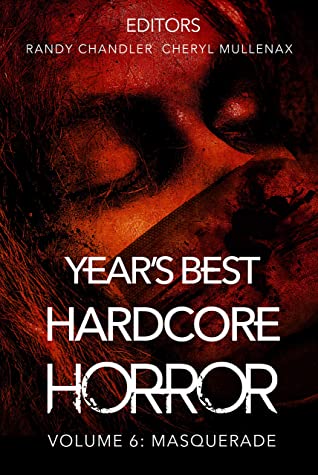
I have a new (old) story out! “Otto Hahn Speaks to the Dead” has been reprinted in the Year’s Best Hardcore Horror, volume 6, from Red Room Press. The story was originally published in The Dark.

This is the second time I’ve had a story in YBHH, and I’m grateful to the editors Randy Chandler and Cheryl Mullenax; I remember them making it plain that people shouldn’t overthink whether their story is “hardcore” or not before submitting. It’s what encourages me to send stuff into them, because honestly? “Otto Hahn” is a very dark and deeply grim little story, but if I had to think of a single word to describe it, I’m not sure that “hardcore” would make the top of the list. It probably wouldn’t even make the top ten. If I had to pick a single word, it would probably be “tragic.” The story deals with an episode in the history of chemical warfare. There’s a lot of terrible things in that history, but this, about the suicide of chemist Clara Immerwahr, may be one of the saddest.

“Otto Hahn” is a story about grief and regret, and in some ways it is a story about the utter uselessness of doing better, because when you have chosen to involve yourself in something so monstrous, well. Is atonement even possible?

I don’t know, but I suspect not.

SFF, Short stories

The Streams are Paved with Fish Traps

I have a new story out! And unlike my last two, this one’s not horror. It’s actually optimistic for once, but that’s what tends to happen when you write solarpunk. It’s an area I’m interested in doing more work in, as I like the focus on community, diversity, and sustainability that’s generally a hallmark of the genre.

This particular story, “The Streams are Paved with Fish Traps,” can be found in the anthology Multispecies Cities: Solarpunk Urban Futures, from World Weaver Press. The anthology was produced with the support of the Research Institute for Humanity and Nature in Kyoto, Japan, so as you can see there is a strong focus on an interdisciplinary approach here, and that’s something I appreciate.

My own story talks about urban ecology, which is a field that, like solarpunk, I’m becoming increasingly interested in. Back in 2019, I saw a news story out of Wellington, New Zealand, about a discovery some ecologists had made in the storm water systems beneath the city. The pipes were being colonised by fish, including eels, and I thought that was just marvelous. I knew straight away that I wanted to write a story about it, and so when World Weaver Press contacted me, wanting to know if I’d write a story for their upcoming anthology, it was an easy choice. I’m so glad to be a part of this project! Hopefully there’ll be many more like it in the future.