
SFF, Short stories

Year’s Best Aotearoa/NZ SF&F, Volume 2

This must be one of the most gorgeous covers I’ve seen recently! It’s by Laya Mutton-Rogers, who has done an absolutely beautiful job.

New Zealand hosted WorldCon this year, or at least it was supposed to (thanks to pandemic, the whole thing went virtual) but anyway: this, the second volume of Year’s Best Aotearoa New Zealand Science Fiction & Fantasy, was designed to coincide with the convention, in an effort to introduce more people to Kiwi speculative fiction. I was lucky enough to have a story in the first volume, so I was just as delighted to have a story in the second.

“Inside the Body of Relatives” was originally published last year in Asimov’s. It’s a story about an elderly woman and her artificially intelligent house. It’s a very quiet story, with no AI going rogue or anything like that – just a house programmed to be kind trying to get its increasingly lonely owner to socialise more. Which she does, eventually, but not in any way the house expects. It’s evolutionary biology to the rescue, and the story itself developed from one of those nights when I was tucked up in bed, listening to the rain on the roof and contemplating building materials. Which I don’t do very often, but in this case it all came together nicely.

Thanks to Marie at Paper Road Press for publishing one of my stories again, and if you’re interested in this lovely book, you can find it here.
SFF, Short stories

The Birth and Death of Islands

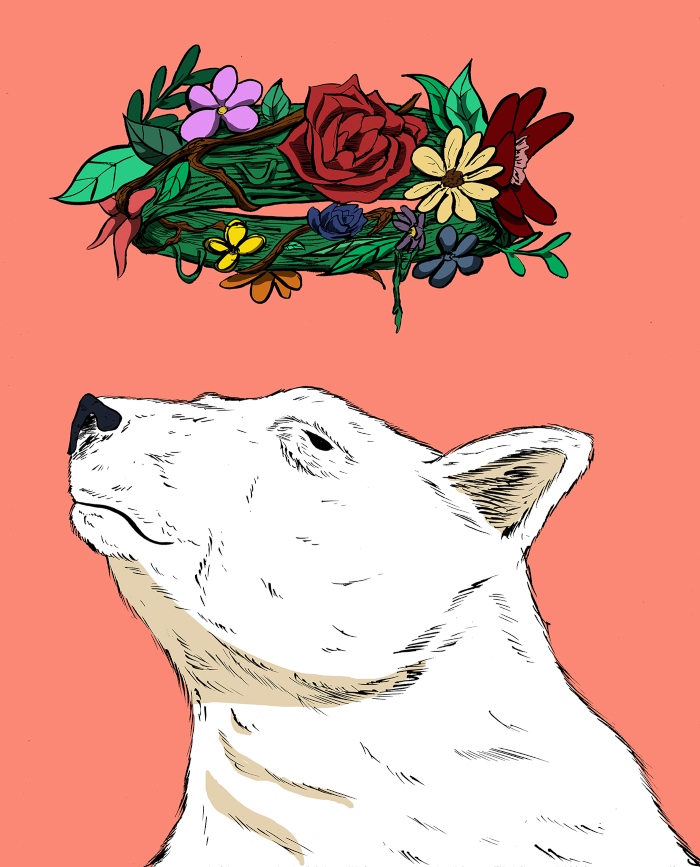
I have a new story out! “The Birth and Death of Islands” has been published in Kaleidotrope. I’ve had a couple of stories in Kaleidotrope before, and they’re one of my favourite markets. They have this aesthetic combination of weird and pretty that I really love – and I think that might be my polar bear on the cover art, I really do.

Not that my story is about a polar bear, though one does feature. “The Birth and Death of Islands” can be charitably described as “The Little Mermaid” meets the Black Death, except here the Sea Witch, the sole survivor of plague, is repopulating the world with islands and creatures fashioned out of the buboes that keep erupting from her weird and grotesque flesh. These creatures include mermaids and a loyal polar bear, both of whom upend the experience of disease that so constantly traumatises the contaminated protagonist.

I’d like to say that this is a well-crafted piece of metaphor that I wrote in response to the current pandemic, but the truth is I sold this back in 2018. Fred Coppersmith, the editor of Kaleidotrope, buys stories well in advance, so if one of us is seeing the future it isn’t me. Anyway, the story’s free to read at the above link, so have fun with its disgusting details and disintegrating mermaids.

SFF, Short stories

Resilience

I have a new story out! “Resilience” has been published by Stuff, and is free to read at the link there. It’s the second in a series of cli-fi shorts commissioned by Stuff, so it was a lovely surprise to get that email from them. They said they were looking for a more positive story about the future, and how it might play out in a changing climate. They also said it had to be family friendly, which I admit gave me brief pause. (There’s often more than a touch of horror in my stories, and so when I heard “family friendly” my first reaction – thankfully internal – was “No killing characters off this time, then.”)

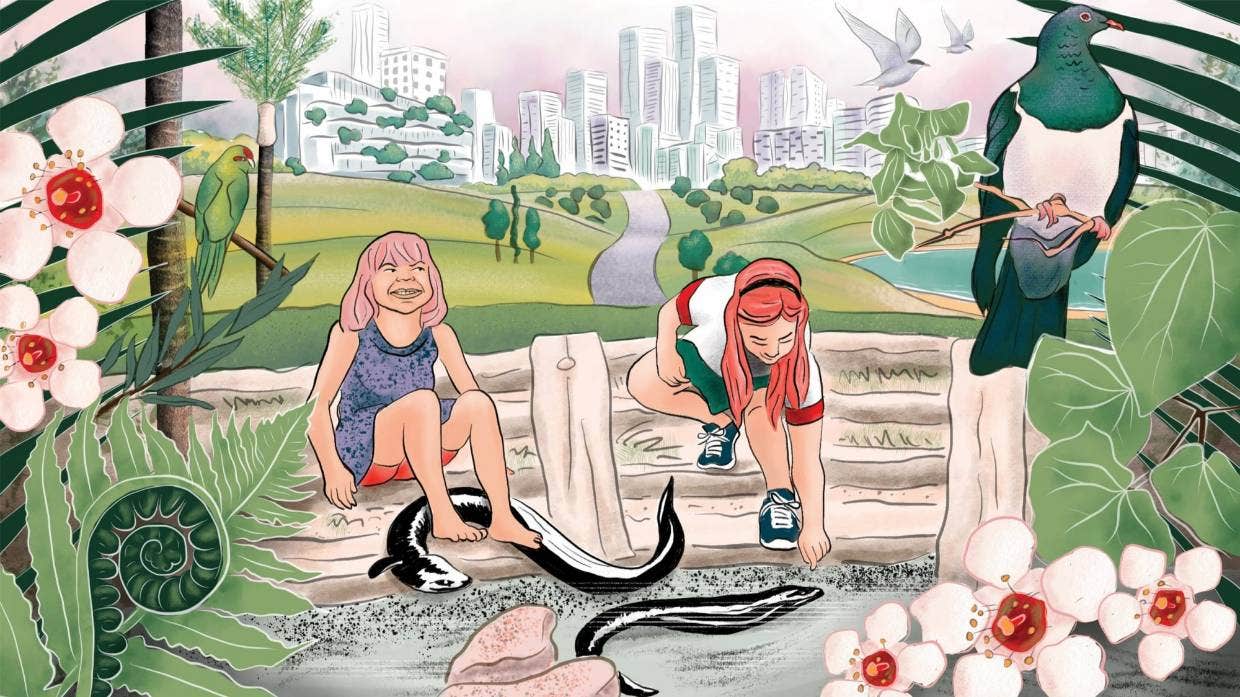
So I came up with this story about two kids, Coral and Elsbeth. I reckon they’re about ten years old. Anyway, they meet each other one summer day and run off to play hooky, messing about on the beach and discovering the nesting sites of some very special birds. The emphasis on conservation is going on in the background, really, with the urban landscape they live in having undergone an enormous ecological makeover. Increased biodiversity increases resilience, remember, and with climate change likely to inflict significant disturbance on our ecological systems, supporting biodiversity in our environments is one way of building healthier and more sustainable ecosystems.

And there’s some art to go with it too. Isn’t it pretty?

SFF, Short stories

Black Dogs, Black Tales

Oh, playing catch-up on the posts I should have made…

Anyway, I have a story out! It’s not a new one, but it’s been reprinted in an awesome charity anthology, Black Dogs, Black Tales, which is benefiting the Mental Health Foundation of New Zealand. It’s subtitled Where the Dogs Don’t Die, so don’t worry about turning the page and finding poor Cujo. Some of the tales in here are pretty grim, but the dogs survive so that’s the main thing.

My story, which the editors Tabatha Wood and Cassie Hart kindly included, is “The Feather Wall,” which was first published last year in Reckoning. The dog in this story – cleverly called Dog – is one of those service animals trained by the Department of Conservation to protect our native birds. In this case, the kākāpō: a flightless parrot native to NZ which is teetering on the brink of extinction. It’s basically kept alive on offshore islands which have been stripped of introduced predators like rats and stoats. Anyway, “The Feather Wall” is a post-apocalyptic story wherein a man and his dog keep up their conservation work, because kākāpō are worth protecting even if the world has gone to shit. They really are! Anyway, if you’d like to read the anthology and support a good cause, the link’s above. 

Nonfiction, Papers, SFF

Confronting the Minotaur

I have a new paper out! “Confronting the Minotaur: Gender, Reconciliation, and the Labyrinth in Fantasy Literature” has been published by BFS Journal.

I love labyrinths, I really do. They pop up a lot in fantasy lit, and I’m always glad to see them. They always seem more exciting in fantasy than in real life, but such is the case for a number of settings, I’m sure. Anyway, over the years I’ve noted a number of variations related to gender: who solves the labyrinth, who’s settled in the middle of it, that sort of thing. One of the archetypal stories is of course that of Theseus, who – with the help of Ariadne – solves the labyrinth to confront the monstrous devouring Minotaur at the centre of it. If we take this as a basic pattern (albeit one that rests primarily on the European tradition of labyrinths, as opposed to those traditions from other parts of the world) we can see how such patterns are repeated in, for example, Ursula K. Le Guin’s The Tombs of Atuan and J.R.R. Tolkien’s The Hobbit and The Lord of the Rings. Whether the maze is made out of underground tunnels or the dead marshes, the risk of being eaten or otherwise swallowed up is significant. Does this pattern change, however, when the solver of the labyrinth is female? Meredith Ann Pierce’s The Darkangel is an interesting contrast here, where the monstrous devourer exists outside the labyrinth, and the centre is a place of science and safety.

I tinkered with this paper on and off for well over a decade, so I’m glad it’s finally been published. Let me know what you think!