SFF

Clarion West Writer’s Workshop

clarionwestThat’s something knocked off the bucket list!

Yesterday I arrived back in New Zealand after six weeks in Seattle, attending the Clarion West Writer’s Workshop. It’s focused on speculative fiction writers – science fiction and fantasy and horror – and for six weeks 18 of us from around the world lived together, writing and critiquing and learning from the six professional tutors brought in to help us become better artists.

We were very lucky to have one of the sorority houses associated with the University of Washington to live in. Of course over in the US it’s summer right now, so the house was available to be hired out, and it was perfect for what I’ve been privately calling “writer’s boot camp”. Being at Clarion West was so, so rewarding in a number of ways, but I don’t think any of us (come from as far around the world as India, Wales, and the Antipodes) wouldn’t also call it “exhausting”. But Huw and Neile, the workshop coordinators, were used to having whiny writers to wrangle, and everything was super well organised to keep us happy and (mostly) productive.

I’ve wanted to attend a Clarion workshop ever since I found out they existed. There’s a sister workshop – Clarion in San Diego – that I got accepted to back in 2014, but unfortunately I wasn’t able to attend. Thankfully I got a second chance, and it was well worth it! If any of you reading are thinking about going, I wholly recommend it. Our tutors – Paul Park, Stephen Graham Jones, Elizabeth Bear, N.K. Jemisin, Sheila Williams and Michael Swanwick – were helpful, informative, and friendly, and the encouragement I got from my fellow students was invaluable. (We now have a standing agreement that the first one of us to sell to Clarkesworld buys beer for the rest.)

If you think you can’t afford to go, apply anyway – there are scholarships available, and I was able to go this year because of one of them.

You won’t regret it!

KiwiWalks

Sellwood Riverfront to Johnson Creek Loop

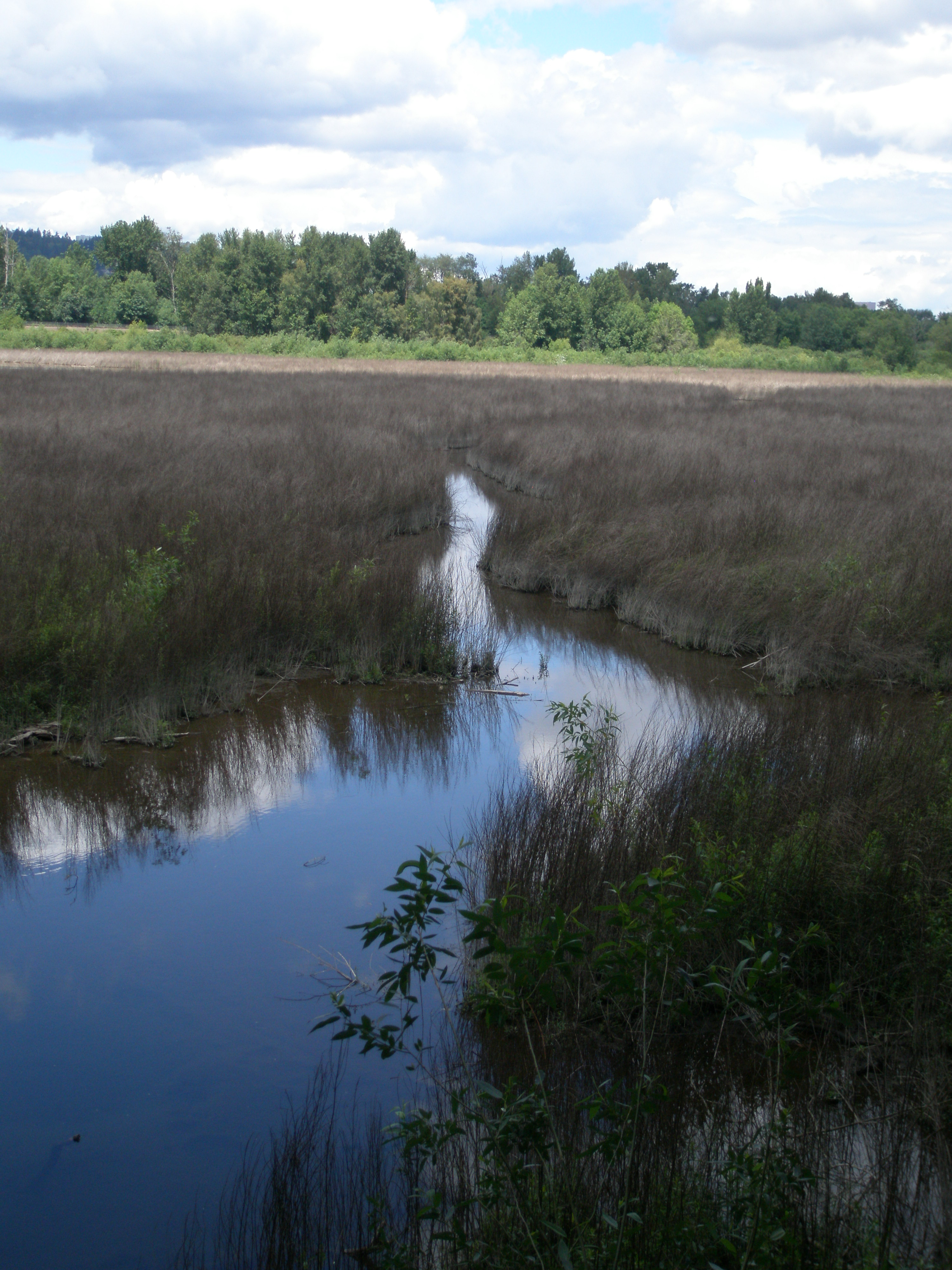
OLYMPUS DIGITAL CAMERA

Ok, I actually did this about 6 weeks ago, but I’ve only just gotten round to blogging about my latest foray into 1001 Walks You Must Experience Before You Die.

I was in Portland, Oregon for several days before travelling up to Seattle to attend the Clarion West Writer’s Workshop (which was fantastic; more tomorrow). I flew into Portland from NZ for two reasons – firstly, it was considerably cheaper. Secondly, there was a simple, accessible walk from 1001 Walks in Portland. I couldn’t resist…

The Sellwood Riverfront to Johnson Creek Loop is easy to get to by light rail, and only takes a couple of hours to walk. There are really three different sections. Starting at the rail station, I wandered through the Johnson Creek renewal project, which was fantastic and my favourite part of this walk (and a strong contender for favourite part of the trip all round, actually). According to the informative panels sprinkled along this creek walk, there’s been an ongoing ecological restoration project going on here, trying to return the creek to a viable state, and it’s clearly working. This little green corridor is beautiful, and full of wildlife. I even saw a Chinook salmon swimming upstream, not two minutes after reading about them on the information panel! Highly recommended.

Also recommended is the stroll through the neighbourhoods on the way to Sellwood Riverfront. The houses were all so pretty! With amazing gardens and shared community playgrounds on the footpaths. I didn’t take any photos here – it seems rude to me to start snapping at people’s family homes without permission – but I was charmed.

OLYMPUS DIGITAL CAMERAThe Sellwood Riverfront Park, including the Oaks Bottom Wildlife Refuge (a wetland, the only one in the city I believe) was also enjoyable but didn’t quite have the appeal of Johnson Creek if you ask me. Lots of people enjoying it though, both in the park/refuge and at one of the country’s oldest amusement parks, which was overrun with children so I didn’t go in. And despite my love of all things rollercoaster I didn’t really want to – it had been such a quiet, happy walk that I was loathe to wander off the loop for sugar and screaming.

Definitely worth doing – if only for the restored Johnson Creek, which was wonderful in every respect. I don’t recall who/what person or community group has spearheaded that effort, but they deserve a medal, every one.

Current Count: 995 Walks To Experience Before I Die.

SFF, Short stories

Responsibility

at the edgeI have a new story out! “Responsibility”, aka “The Story About The Zombie Chickens (I Can’t Believe Anyone Bought This)” is out in the anthology At The Edge from Paper Road Press.

At The Edge is largely a collection of stories from New Zealand and Australian writers, themed around edges and boundaries and liminality. When I saw the call for submissions last year, I knew it was something I wanted to write for. And luckily my story was accepted!

Though it has to be said, “Responsibility” is not the kind of story I usually write. For one thing, it’s about zombies. They’re not something I generally gravitate to, but I suppose everyone’s got a zombie story in them somewhere and this is mine. For another, it’s very black-humoured – well, a lot of people seem to find it funny anyway, and I’m not a funny writer in general. Sad and morbid, maybe, but not funny. And I’m embarrassed to say that, zombies aside, it’s based on a true story. A few years back I ended up pet-sitting for my sister while she went overseas for a month. At the time she had two dogs and two cats and six chickens, and she was barely out the door before one of the chooks keeled over. I found it dead in the coop, in classic position: on its back, with rigid little feet in the air.

I buried it under her front lawn. I tried to bury it discreetly at the edges under bushes, but everywhere I dug saw me hit a polythene layer under the sod so I gave up and middle of the lawn it was (it serves my sister right for being a decent gardener). That night there was a storm, and after watching a horror film I was tucked in bed, listening to the thunder and wondering if the chicken was really dead. Sample internal conversation: “Self, are you sure you didn’t bury that poor thing alive?” “Self, it had rigor mortis.” “But Self, are you certain it wasn’t just chilled and unconscious?! It was sick, after all.”

Yes, I know, but I freaked myself out sufficiently that I scuttled out into the storm, in my nightie, to roll a giant planter over the top of the grave, just in case this bloody chicken decided to crawl out of its two foot deep hole and come seeking revenge.

Of course it ended up a story.

We were born at the same time, my sister and I, born into bodies of opposites. Yet for all that we love each other, though her touch means death and mine does not. Though her house is full of zombies and mine is full of life. But sisterhood comes with responsibility and with care, so when she asks if I will house-sit for her while she goes from Auckland to New Orleans, to speak at conferences of deaths that are not her own, deaths that are dry-toothed while hers run with red, with soft and sinking flesh, I agree.

Winter’s house is filled with tetrodotoxin and datura. Dried puffer fish hang from the kitchen ceiling and the benches are littered with pestles. There are two dogs that were schnauzers once, two cats who slink in silence, and six chickens in the pen, their feathers dull and drooping but they all eat from her hand with relish and fight over finger bones…

At The Edge (and the rest of the story) can be found at Amazon or Paper Road Press.

SFF, Short stories

Portobello Blind

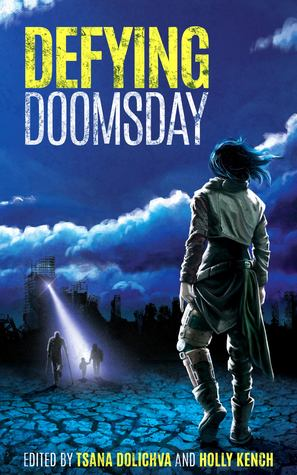
doomsdayI have a new story out! It’s in the anthology Defying Doomsday from Twelfth Planet Press, which is edited by Tsana Dolichva and Holly Kench. As you can probably guess, it’s a collection of apocalyptic/post-apocalyptic short fiction, but with a twist: in each story, the protagonist is disabled.

If you’ve ever paid much attention to this sub-genre, you’ll recall that disabled characters, when they exist, exist pretty much solely to die early on. An illustration of edge and cruelty, and all so very realistic (and that’s a loaded descriptor in genre fiction, one that’s continually applied only to some circumstances and not to others). But if you’re used to navigating a hostile world, to constantly being at a disadvantage, who’s to say you can’t use these skills to good effect when disaster hits?

Anna, the protagonist of my story “Portobello Blind”, is, as the title suggests, blind. She’s also 14 years old, and stuck alone at the fairly isolated Portobello Marine Laboratory, Dunedin, after her father leaves to find supplies and never comes back. Now the Portobello lab is a real place – I did some grad work on algae there – and while it has a nice big break room with food in the fridge that food can’t last forever, and Anna understands pretty quick that she has to find a way to feed herself if she wants to stay alive…

The worst part of the apocalypse was the sheer bloody boredom of it.

Anna had never expected to be the – apparently – sole survivor of a quick and dirty plague, but if she had, her expectations would have been different. All the apocalypse stories she knew had conflict and danger and high stakes, arenas and journeys and great symphonic soundtracks.

Anna spent hers fishing.

You can pick up a copy of Defying Doomsday at Amazon, or any other number of places.

KiwiWalks

Dunedin Heritage Walks

I spent many years at university down in Dunedin, so technically I’ve walked every bit of these walks already. But there I was, flipping through the utterly delightful 1001 Walks You Must Experience Before You Die, and there they were: the Dunedin Heritage Walks.

They’re not very long, less than an hour each. Both of them start and end in the Octagon, which is Dunedin’s version of the town square, a place where I’ve spent many happy hours, mostly drinking. And each walk wanders round the oldest buildings of the city, built way back when Dunedin was the richest city in the country, courtesy of the nineteenth century Otago gold rush.

So last weekend I happened to be back down in Dunedin, attending a conference there (I gave a paper on the presentation of science in a couple of second season episodes of The West Wing). And on Saturday morning, after the conference, I had a few hours to kill before flying home and there was a southern miracle: sunshine on a winter’s day! It was even warm. So I picked up the relevant pamphlet from the information centre and went and did the Heritage Walks officially instead of technically. It was basically a hunt for those little historic plaques on the sides of buildings I was already familiar with, but the walks were very pleasant nonetheless. And I was pleased to see that Dunedin’s being covered in murals – like the one of a moa, by an artist called Phlegm. Another detail I’ve never seen before is one of the stained glass windows in the cathedral, which refers to the local environment, being filled with seals and yellow-eyed penguins and other organisms rarely seen inside a church.

Current Count: 996 Walks To Experience Before I Die.