SFF, Short stories

Nation Building and Baptism

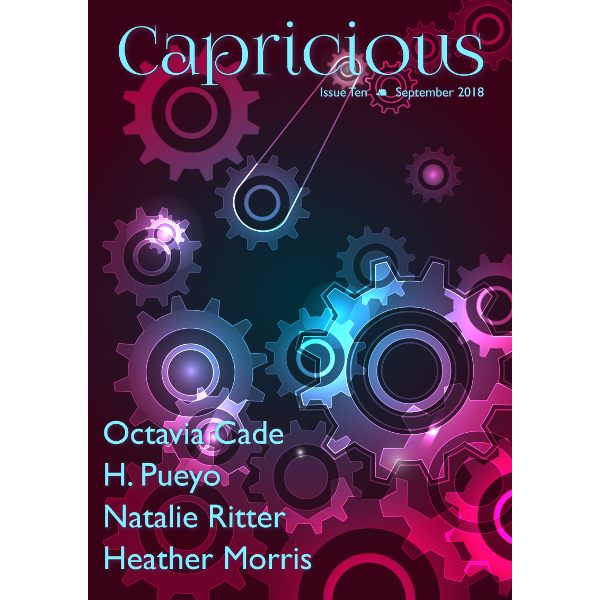
I have a new story out! “Nation Building and Baptism” is in the new issue of Capricious, available here. It’s part of a series of stories I’ve written about future post-apocalypse New Zealand, rebuilding itself after global ecological collapse.

I love post-apocalyptic fiction, mostly because I really enjoy seeing how communities choose to reinvent themselves afterwards. Do they fall back into the same old patterns? Do they do worse than that, building dystopia out of destruction? Or, what I’m more interested in, do they do better? Apocalypse is a dreadful thing, but it’s also a chance to improve, to look at the ashes of life around you and say “Right. Let’s not do this again” and go on.

It’s not that I don’t like dystopias. I do! But I think we’re over-heavy on the miserable response to apocalypse. Of course there’s going to be misery, there’s no getting round that, and hard choices. But I wanted to do a series of stories where choices were about how best to help, how to support the environment and each other. How apocalypse can be repurposed as an opportunity for the creation of a better way of living. “Nation Building and Baptism” is set in a world where conservation and ecological protection has been made a central concern – as it would have to be, after ecosystem collapse. And that has a whole lot of consequences, such as what to do with refugees, for instance, people from places where the environment lacks viability enough to support them. That’s what this story is about – valuing desperate people as people, and giving the them chance to be a part of a safe and stable community again. If you’re interested, pop over to Capricious and take a look!

SFF, Short stories

Sugar Ricochets to Other Forms

I’ve a new story out! “Sugar Ricochets to Other Forms” is in the Mother of Invention anthology that’s just come out from Twelfth Planet Press. As soon as I saw the call for submissions I knew I had to send a story in. A feminist anthology focused on gender and artificial intelligence? Who could resist.

Luckily for me, I had a story idea in the wings ready to go. (This is why it’s so useful to jot down ideas when you have them, even if you’ve not got time to write them immediately.) I’d read, some time back, a book on the history of robotics, and it happened to mention a 17th century text called the Pentamerone, by Giambattista Basile. In this book was the story of Bertha, who built herself a boyfriend out of sapphires, scented water, almond meal, pearls, and sugar. And I thought at the time I read it how delightful it was, and how suited it would be for an updated version.

What it is not is the basis for a science fiction story. Luckily, Twelfth Planet Press wasn’t limiting themselves to sci-fi interpretations of the theme, so I used inspiration and theme to whip up what is probably the only sexbot story I will ever write. I’m not really a fan of that particular trope, but it turns out that if you can build a man out of almonds and sugar you can probably build one out of cake… and cake improves everything.

Here’s a little appetiser for you… if you want to read more, go pick up the awesome anthology!

She filled his skull with honey.

Honey made him thick and sweet, perfect for love. It also looked better if things went wrong. Once she’d filled his head with cherry jam, a thin sweet-sour mix that gave him a measure of tartness in bed, but the woman who rented him became over-excited, smashed the back of the sugar skull against the bedhead and the jam had started to ooze from eye sockets.

She’d brought him back with half his face eaten off. “I couldn’t help it,” she said, red-cheeked and unable to meet Berta’s eyes. “He was just so delicious. I’ll pay for damages, of course.”

It was a good thing she’d kept the moulds. It made it much easier to bake a replacement cheekbone, cover over the exposed and splintered sugar teeth with thin layers of almond icing. But from then on it was honey in the skull, which if it leaked at least had the appearance of scented tears, and bloodless….

SFF, Short stories

The Backward Lens of Compromise

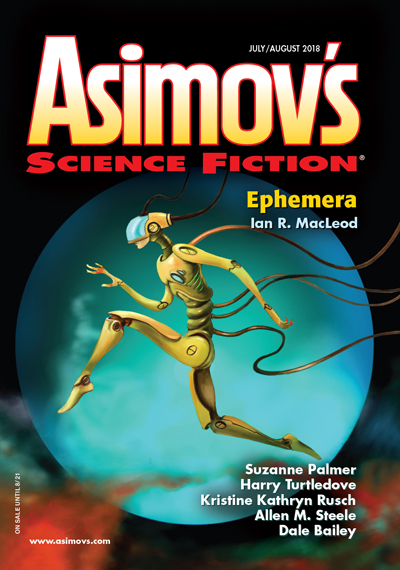
I’ve a new story out! “The Backward Lens of Compromise” is the third novelette of mine to appear in Asimov’s, and I’m really happy for it to be there. Like the other two, “Backward Lens” is about science history – this time, the history of telescopes and the astronomers who look through them. Interwoven with this is a modern day story of science education.

As a science communicator, I’m all for science ed. But science can be expensive to teach – it needs labs and equipment for hands-on work – and in impoverished communities, with underfunded public schools, it’s easy to cut. And in this story that’s what’s happening, except it’s going further than the classroom. An old observatory is being shut down, one that works with schools to teach students about the stars. The observatory doesn’t make money, and the kids from this disadvantaged community are deemed to be no-hopers anyway, so why throw good money after bad in getting them a proper education? Needless to say, the observatory’s astronomer has no truck with this… and neither do the kids themselves. And the observatory is changing around them, all magic and seeing and comprehension, and it turns out that what these no-hoper kids have already been taught about science and science history is an empowering thing…

Because it is. Because critical thought and objective methodology, the ability to discover new things, is a crucial aspect of education. Kids who lack it become citizens who lack it, and that’s what leads to poor schools in the first place.

Food, Horror, SFF, Short stories

Sharp and Sugar Tooth Kickstarter

So, the anthology that I’m editing for Upper Rubber Boot Books, The Sharp and Sugar Tooth, is getting closer! There’s a kickstarter on for it right now, so if you like short stories and horror and food, and feminism in your fiction, please take a look. There are all sorts of levels and rewards, including copies of Sugar Tooth and the other speculative anthologies in URB’s Women Up To No Good series, so it’s totally worth your while!

The anthology had its early genesis in the food and horror essays I did for The Book Smugglers a couple of years back. Once I’d finished that non-fiction collection, I was still interested in the food horror theme, and when I saw that URB was looking for new anthology pitches I thought I’d give it a go. The pitch was accepted, and last year I read through a heap of tasty slush, looking for the creepiest and most empowering horror stories I could find. There was a wide, wide range and it was really difficult to pick the best, as so many wonderful stories were submitted. But pick I did, and there are 22 fantastic stories from 22 wonderful, food-loving authors!

From Chikodili Emelumadu to Alyssa Wong and Catherynne M. Valente, as well as newer authors like Jasmyne J. Harris, H. Pueyo, and D.A. Xiaolin Spires, come stories of the sweet and the savoury and the scary, of apples and confectionary and strong meat, of little Wonderland cakes and post-apocalyptic nature preserves, of honey bees and hungry daughters and organ-eating. Please come back us, you won’t regret it!


Horror, SFF, Short stories

Gone to Earth

I’ve a new story out! “Gone to Earth” is free to read in the latest issue of Shimmer.

It’s a psychological horror story about Mars: the effect it has on astronauts, and their inability to adapt to it. “Gone to Earth” is also one of the earliest stories I ever wrote. It’s been sitting on my computer for close to a decade now, and most of the time it was lying fallow. New-writer me sent it out a couple of times, and it was promptly rejected, and I was disappointed but not all that surprised.

I knew the idea was good, but the execution was… lacking.

That’s why when you’re a writer it’s so very necessary to be a reader as well. Especially if you’re not a very good writer – and none of us are very good writers when we’re starting out. If you don’t read, and read widely, it’s all too easily to fall into an isolated creativity where you simply don’t have the tools to recognise that you’re producing sub-par material. But because I did read, I could assess that early version of “Gone to Earth” with some objectivity, and if I didn’t quite know why the writing sucked, I still knew that it did.

So I left it and left it and left it, and then late last year I pulled up that old file and started again. And I’m really glad I did, because I still love the ideas in this story. Take a look!

He’d thought the green would keep him from dreaming of the memory of arid sterility, the red and waterless horizon.

It didn’t.

His body was racked with chill and he hunched in his bed, trying to breathe with the rhythm of tides, to slow his heart to growing things. Yet even the warm night air of the Coromandel summer, straight from the coast and rustling through rātā trees, couldn’t dispel the cold. The nightmares still came regularly, suffocating waves of homesick regret. Strange that they hadn’t passed now that he was home again and anchored to the world of the living, and even stranger that they came from an adventure marking him a hero. He’d even felt heroic at the beginning, but all the bravery of heroism had come from ignorance, the assumption of a strength not yet tested because the testing was unimaginable.

An astronaut on the first manned mission to Mars! All the psychological tests he’d undergone had been for other things: socialization, conflict resolution in close quarters, the ability to cope with long-term and claustrophobic isolation. Alan had passed them all and felt himself stable enough, had never wavered either in ambition or explorer’s faith.

They’d never thought, none of them, that what brought him down would be a different sort of lack….