Science, SFF, Short stories

Eating Science with Ghosts

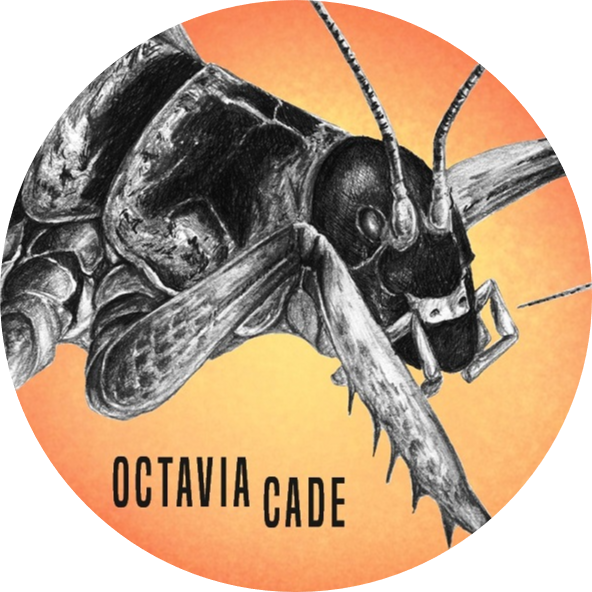
asimov-s-science-fiction-30I have a new story out! Actually, it’s a novelette. My first novelette, and my first story in Asimov’s Magazine.

“Eating Science with Ghosts” is the story of one very long dinner party, where the main character meets a number of dead scientists linked to weird stories of food and drink. Did you know, for instance, that Marie Curie’s cookbook is so radioactive it has to be kept in a lead box in the National Library in Paris? Or that Thomas Edison used to interview prospective employees by feeding them soup? If they tasted the soup before adding salt they were experimentalists at heart, and if they added the salt automatically (like I would, sorry to say) they assumed too much and were useless to him.

It’s science history as much as science fiction – actually, I’ve been planning to write a pop-sci book around this idea, so this wee novelette is like a proof of concept.

“Eating Science with Ghosts” isn’t available online, but if you can track down the Slightly Spooky October/November issue of Asimov’s it’s in there. Here’s a little taster, to see if it’s your kind of thing:

I’m a little bit drunk before the meal even starts. My guests are late, so that’s some excuse – and a bad joke to boot – but it’s always been easier to see the ghosts when I’m not entirely sober.

I used to try and block them out. But they never went, so eventually I learned to live with it. To live with them. In some ways now they feel like old friends, so when I got my doctorate I planned a celebratory meal. Not the one with family and friends, co-workers from the lab. This is the real celebration, the one that matters… and if those astronauts doesn’t turn up soon I’ll be face down on the table, passed out on one of those lovely little sidewalk cafés that Paris does so well, before I’ve even finished the first course.

I think my tongue is going numb. It’s the vermouth, come in a range of combinations and pretty glasses, nearly all of which are empty. This is a place for vermouth. It was advertised here, back in the early twentieth century: the first neon advertising sign in the world, and naturally it was for alcohol. Cinzano, the word lit up atop a building opposite, lit up in shining white against a brilliant red and blue background. Capital letters, a simple font… it all says Look at me! Buy me!
Science, SFF, Short stories

Kelp

takahe87I’ve a new story out! “Kelp” has just been published in issue 87 of takahē. One of New Zealand’s long-running lit markets, takahē is I think the first speculative story I’ve ever placed in a literary journal!

“Kelp” is a quiet little post-apocalyptic story. One scientist in a boat, studying kelp to try and cope with the end of the world. As far as the scientist knows, he’s the only one left alive and the science of his life’s work is something to put his back against, to try and give structure and meaning to his existence.

The kelp was thick and it was strong. It didn’t rip easily away from its substrate, not like him who floated on the ocean, who had nothing but anchors to keep him in one place. Any holdfast he might have had had been eaten away by virus.

Rock gave way sometimes before holdfasts did. He’d seen the kelp, washed up or floating with a chunk of rock attached to the base, and he’d wondered how strong the waves had been to tear it up. More often, he’d seen holdfasts eaten away, weakened by parasites – by worms and by molluscs, even, though shellfish had never been his interest.

He’d come to study parasites of another kind, those that caused galls, eukaryotic. He’d wanted to map the spreading of them around the islands, from one population to another. But the study had been limited – enough for two, over a season of summer months.

He began to study the worms, to bring them up and put them in alcohol. To build a survey. If he didn’t work, he wasn’t a scientist any longer.

Without science, there was nothing left…

“Kelp” is the third story of mine set in this post-apocalyptic world (two post-, one pre-). It’s a project I’m working on where the only people who survive a sudden, deadly plague are a small handful of Antipodean scientists who’ve managed to live through disaster only because their fieldwork has taken them to places so isolated they’re out of contact with the general population.

Science is so often the culprit in apocalyptic narratives – it’s used to build a bomb or a virus or fails to save from a meteorite, for example – that I wanted to write a post-apocalyptic environment where it’s a uniquely positive experience. Something that brings people together and allows them to find satisfaction and purpose in what’s left behind.

I’m not sure yet if this universe is going to be a short story collection or a sort of braided novel where the characters come together in various ways. Still, it’s fun to play with and that’s the main thing.

Novellas, Science, SFF

The Ghost of Matter wins SJV!!!

ghost-of-matter_cover_medThis last weekend was New Zealand’s national science fiction convention, Au Contraire. It’s also when the Sir Julius Vogel Awards are held. The Ghost of Matter was nominated for best novelette/novella, and I’m pleased to say that it won!

I was so convinced it wouldn’t that I hadn’t prepared anything to say, and had to stumble to the front to receive the trophy before gaping hopelessly at the audience. I don’t think I was very coherent, but at least I was brief. If it wasn’t clear then, I shared the category with five other fantastic stories, and any one of them could have won. Thanks are due to my editor Marie at Paper Road Press, who helped turn the draft into something a little more well-considered. I’m happy to report that the Shortcuts collection, of which The Ghost of Matter is a part, also won best collection, as well as best artwork for Casey Bailey’s amazing cover.

If you haven’t read it, The Ghost of Matter is about New Zealand’s most famous scientist, Ernest Rutherford. There’s an excerpt available free to read at Paper Road Press, and it’s available to buy there and at Amazon.

Poetry, Science, SFF, Short stories

Carnival Microbial

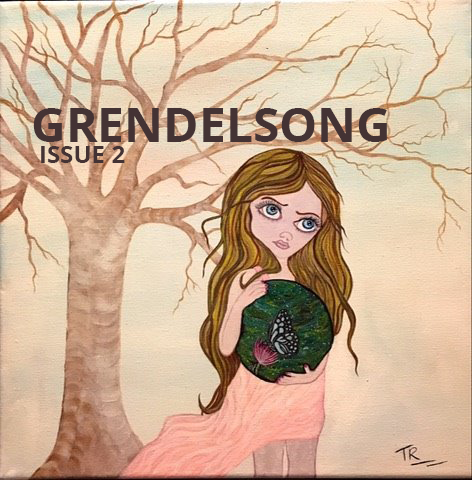
grendelsongI’ve a new story out!

Carnival Microbial” is free to read in the latest issue of Grendelsong. It’s creepy, creepy science: a circus where the performers are all microbes. Specifically, horrible diseases: Scarlet Fever as a trapeze artist, Tetanus as a human blockhead, and so on. Sandwiched in the middle of this little prose-poetry collection is the freak show… a caravan of historical microbiologists, of deadly bacteriologists. And when Smallpox gets a little too close to Edward Jenner’s cage, the Carnival is out a ringmaster and the microbes have to go about selecting a replacement.

It’s weird biological fantasy, essentially. Now usually my biological preferences fall to plants, but I like talking about science in interesting ways, and there’s more to science than seagrass.

And talking of Jenner, here’s his excerpt. You can read the entire strange thing at the above link if you’re interested.

Edward Jenner: has a cowhide on his wall, stretched tight in four directions and with the feet cut off. The cow’s name is – was – Blossom.

has a milkmaid with poxy hands and otherwise perfect skin, who sings as she squeezes and believes all the tales her mother told her. Her name is Sarah.

has a garden, and a gardener who raises kids as well as cabbages and carnations and chances. The child’s name is James: he is eight years old, with skinned knees, and can be trusted not to make a fuss.

has a scalpel, to scrape the pus from milky hands, to open up the freckled skin with slices and supplement with smallpox. The scalpel doesn’t have a name. Tools very often don’t – or so Blossom and Sarah and Jamie would say, all innocent, as if their opinions mattered to anyone.

Poetry, Science, SFF

Chemical Letters: Aluminium

Caroline sits in Piccadilly Circus

on the steps under Anteros.


Pigeons scramble on bricks before her

and each brick has a letter. Sometimes two.

They are familiar,

the Kemiske Breve.


A man sits next to her, throws bread

from a paper bag like a hollowed out envelope,

with a red wax seal, Ørsted.

He offers it to Caroline, and they feed the birds together.


I used to wonder, he says, what it was that caused

several pieces of the same kind

to come together, cohere in unity.

Now I’m here, I wonder.

Was it love?


This is my favourite poem from my recently published collection, Chemical Letters, wherein a woman called Caroline wakes up in the periodic table. Because she’s a scientist, she promptly goes exploring. She’s able to do this because the table takes the form of an apartment block, and behind every door is a place or a time related to that element.  This is the aluminium poem.

If you’ve ever been to Piccadilly Circus in London (I have!) you’ll have seen the winged statue on top of a fountain. The statue is popularly – and wrongly – called Eros, but it’s actually his brother Anteros. What’s the difference? Well, Eros is the god of erotic love, while Anteros represents returned love that’s not necessarily erotic in nature. (It was put up to commemorate a philanthropist, so you can see that Anteros is really the more appropriate of the two.)

So what’s this got to do with aluminium? Well, the Piccadilly Anteros is the first statue in the world to be made from aluminium.

Aluminium was first produced in 1825 by the Danish scientist Hans Christian Ørsted, who you can see in the poem above is sitting on the fountain steps beneath Anteros, feeding the ever-present pigeons from a bread bag shaped liked an envelope. Ørsted also happened to write a book called the Kemiske Breve – the Chemical Letters. (See where I’m going with this?)  There’s a visual pun I couldn’t resist here that makes me happy: though it’s not the case in real life, the bricks around this fountain are imprinted with the abbreviations for elements… with H and He and Li, with Al for aluminium…

One of the things that Ørsted wrote about in the Kemiske Breve was cohesion. How chemistry came together, with its particles and elements and magnetic attractions. And it’s this poem that hints as to how Caroline ended up in the periodic table to begin with. A later poem indicates she’s spending her afterlife there. (It’s not just her, and it’s not the only afterlife…)

But why?

Perhaps it’s love that brings like together, says Ørsted, sitting under the statue of love returned.

Perhaps Caroline loved science so much that that love got paid back after death, so she could spend it in the company of what she loved, and those who loved it with her. Perhaps that’s Caroline’s cohesion and coming together, and Ørsted with her…

Yes, I’m a science nerd. Sue me. It’s my favourite of the chemical poems, and the part that sticks it all together. If you want to read more, maybe check out the collection?