Food, Horror, SFF, Short stories

The Sharp and Sugar Tooth

I’ve spent the last year thinking a lot about food and horror – how our relationship with food impacts our ideas about consumption, and how that consumption can be made a dark and twisted thing. It’s something I’ve written about in my own stories (for instance “The Mussel Eater”), but it’s also something other people have been writing about. There’s a lot of fantastic stories exploring the dark side of culinary life out there…

I’m pleased to say there will soon be more. I’m editing an anthology for Upper Rubber Boot Books, called The Sharp and Sugar Tooth, to be published late next year. Submissions are open, and you can find the submission call here. Basically what I’m looking for is creepy, beautiful, mouth-watering stories with an element of horror. Stories can be dark fantasy or science fiction or straight horror, but they must be themed around food gathering, food preparation, or the act (and consequences) of consumption. Sex, strong language (and cannibalism!) is fine, but I’m not interested in torture-porn of people or animals even if that’s what gets them onto the plate.

Subversive, diverse stories with a focus on women are appreciated. The Sharp and Sugar Tooth is part of Upper Rubber Boot’s Women Up To No Good series, so authors must identify as female, non-binary, or as a marginalised sex or gender identity.

  • Word count: Up to 5000 words.
  • Payment: six cents per word.
  • Publication history: Original stories only. Reprints may be submitted by invitation only.
  • Multiple submissions: No.
  • Simultaneous submissions: No.
  • Deadline: 31 July 2017. All stories will be replied to by the end of August.
  • To submit: Please send stories in standard manuscript format, attached in .doc or .rtf files, to octaviacade@hotmail.com with the subject line SUGAR TOOTH. Be sure to provide mailing address and a short bio.
  • If the work is a translation, please also provide a statement from the rights holder that you are authorized to translate and submit it (both author and translator will receive full payment).

We encourage and welcome stories from voices underrepresented in speculative fiction, including (but not limited to) writers of colour, LGBTQ writers, writers with disabilities, and writers in translation.
 

Horror, SFF, Short stories

The Little Beast

I have a new story out!

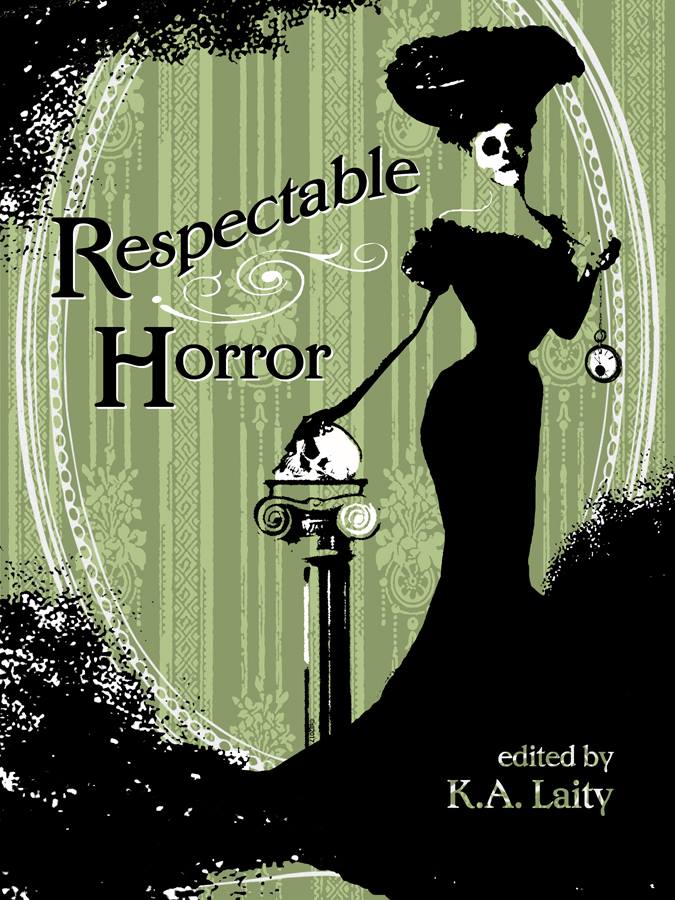
“The Little Beast” has just been published in Respectable Horror, the new anthology from Fox Spirit Books. Now I love pretty much all types of horror, but this anthology focuses on stories that try to horrify you without gore or explicitness. Inside you’ll find more Shirley Jackson than Saw.

“The Little Beast” is based around my least favourite fairy tale. I’ve always side-eyed Beauty and the Beast, and it was always Beauty that got my back up. There’s something so untrustworthy about how saccharine she is. I’m not even talking about her willingness to be sold to the Beast as some sort of family sacrifice. In itself that might be understandable – it’s when it follows the whole disgusting rose episode that sacrifice starts to take on more sinister undertones. If I can pinpoint the one moment when I finally realised that I just don’t like Beauty – and why – it’s that bloody bit with the rose; her desperate, needy desire to take up every last bit of her father’s mental space.

A rose is the worst of long-distance presents. It’s a cut flower, it wilts. He’ll have to wrap the stem in wet tissue, to watch it every second so that it doesn’t fall off the cart or get run over, so that it isn’t bumped and bruised by packages or the careless elbows of passers-by. He’ll end up carrying it himself, the whole of the trip home. It’s such a simple request, that made by his youngest daughter. Such a modest desire.

And every night, when he stops at an inn, he’ll have to ask for a vase and fresh water and before he gets it he’ll have to explain why he wants it. He’ll have to tell about his daughter, about her rose. And they’ll coo and congratulate him on having such a loving girl, and none of them will stop to think that she’s asked for a gift that’ll take more time and trouble than her more conventional sisters. No. They’ll be too busy making a fuss for that.

(None of the fuss will be about him.)

But cut flowers die, and no matter what he does, no matter the trouble he’ll go to, by the time he gets back home the thing’s going to be half-dead anyway, all wilted and with the petals falling off.

And the little beast… the little beast will look at her sisters with their expensive, easy requests and her bottom lip will quiver, just minutely, and then she’ll smile anyway and thank him for the present and say that his coming back safe was all she really needed. And all this ridiculous sequence of events will have been set up, by her, for his next line, because there’s only one thing he’ll be able to say at that point, confronted with that brave, martyred little face and that sad little flower.

“You’re such a good girl, Beauty.” (So much better than your sisters.)

Awful girl. Awful. To read the rest, check out the anthology…

SFF, Short stories

Crown of Thorns

I have a new story out!

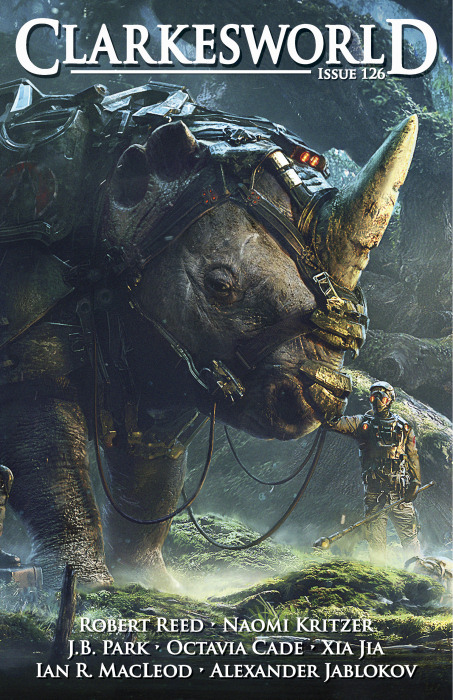
Crown of Thorns“, about fighting invasive species in the wake of apocalypse, is out in this month’s issue of Clarkesworld. It’s set on the Great Barrier Reef, which is being overrun by a particularly hungry, particularly spiny starfish known as Acanthaster planci, or the Crown of Thorns…

Acanthaster planci.

Home was the poison infestation of starfish, the bleaching acres of coral. Home was vast stretches of warm ocean currents with schools beneath, and colonies.

Home was a laboratory where all the concerns were popular. The Crown of Thorns invasion, their numbers out of control and crowding out the reef systems, the unending march of predation turning an ecology to wasteland, and that ecology already vulnerable.

“We can’t do it anymore.” Apocalypse had left a dozen scientists stranded on a reef laboratory—stranded by choice more than compulsion, because there were boats available, research vessels that could have taken them to the mainland if there had been anything left to go back to. The lab was at least familiar, with the advantage of solar power and fishing equipment. No one would go hungry, but for people defined by their intelligence, by the career choice of science and of conservation, there was more than physical hunger to satisfy.

“We’re outnumbered,” said Mel. “And anyway, there’s no one left to report to.” There’d been nothing but silence from the university for months, and silence in the new world, the world defined by plague and absence, could only mean one thing. “It was only a pilot program anyway.” The desperate attempt to clear and monitor a small patch of ocean, to see if intervention could lead to recovery. Diving again and again, in clear warm water with spikes beneath, with stars, and so focused on seabeds and the possibility of resurrection that the other destruction taking place had seemed a distant thing, unnoticed at first, or at least not taken seriously until the silence began to spread, to became too monstrous to be ignored….

This is my first Clarkesworld story! It’s been on my bucket list of markets to crack for a long time now, and I can honestly say I’ve done my damnedest to crack it. “Crown of Thorns” is the 29th story I’ve sent them. 29th!!! If that isn’t persistence I don’t know what is. Still, if you want to be a writer persistence is necessary – and it does pay off in the end.

Unlike post-apocalypse starfish slaughter.

Science, SFF, Short stories

The Meiosis of Cells and Exile

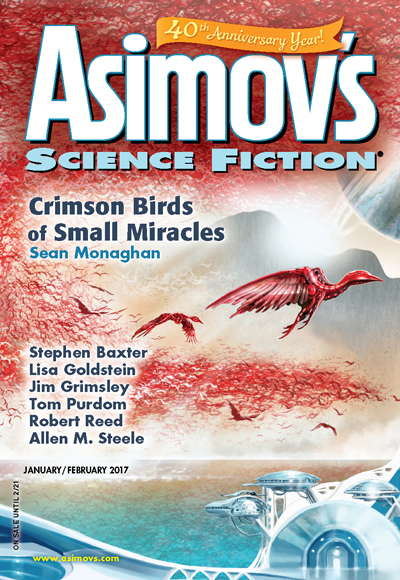
asimovsI have a new story out!

“The Meiosis of Cells and Exile” is a novelette about the Soviet scientist Lina Stern. It’s just been published in the latest issue of Asimov’s.

I enjoy mixing science history and speculative fiction, and “Meiosis” is an example of this. Lina Stern (1878-1968) was a biochemist and director of the Physiology Unit in the Academy of Sciences. She was also a member of the Jewish Anti-Fascist Committee, and Stalin was not impressed. Free speech was not something he found to be a priority, and the scientists and writers making up the Committee disagreed – to their very great cost. 15 members of the Committee were arrested and imprisoned for several years before being sentenced to death in a political show trial. Most were executed in 1952 in what came to be known as The Night of the Murdered Poets.

Lina was the only survivor, saved by her scientific talent and sent into exile in Kazakhstan instead. She was in her seventies at the time, and my story tells of her travel into that exile, fuming with what has been done to her and the rest of the Committee.

There’s (kind of) a happy ending to all that horror. Lina, despite her age, survived both Stalin and the miserable torturing bastard who imprisoned her and the rest of the League. She came back out of exile and spent the next 14 years of her very long life working for science, heading up the Physiology Department again at the Biophysics Institute.

It’s an apt story to be out at the moment, I reckon. Have been on Twitter the last few days, watching accounts from the Badlands National Park and NASA go rogue on climate change, tweeting science facts even though they’re under significant pressure not to. Scientists have the responsibility to speak truth to power, and I reckon Lina would have agreed.

(If you’re interested in reading more, Lina Stern also turns up as a supporting character in my short (free!) novel The August Birds.)

Science, SFF, Short stories

Eating Science with Ghosts

asimov-s-science-fiction-30I have a new story out! Actually, it’s a novelette. My first novelette, and my first story in Asimov’s Magazine.

“Eating Science with Ghosts” is the story of one very long dinner party, where the main character meets a number of dead scientists linked to weird stories of food and drink. Did you know, for instance, that Marie Curie’s cookbook is so radioactive it has to be kept in a lead box in the National Library in Paris? Or that Thomas Edison used to interview prospective employees by feeding them soup? If they tasted the soup before adding salt they were experimentalists at heart, and if they added the salt automatically (like I would, sorry to say) they assumed too much and were useless to him.

It’s science history as much as science fiction – actually, I’ve been planning to write a pop-sci book around this idea, so this wee novelette is like a proof of concept.

“Eating Science with Ghosts” isn’t available online, but if you can track down the Slightly Spooky October/November issue of Asimov’s it’s in there. Here’s a little taster, to see if it’s your kind of thing:

I’m a little bit drunk before the meal even starts. My guests are late, so that’s some excuse – and a bad joke to boot – but it’s always been easier to see the ghosts when I’m not entirely sober.

I used to try and block them out. But they never went, so eventually I learned to live with it. To live with them. In some ways now they feel like old friends, so when I got my doctorate I planned a celebratory meal. Not the one with family and friends, co-workers from the lab. This is the real celebration, the one that matters… and if those astronauts doesn’t turn up soon I’ll be face down on the table, passed out on one of those lovely little sidewalk cafés that Paris does so well, before I’ve even finished the first course.

I think my tongue is going numb. It’s the vermouth, come in a range of combinations and pretty glasses, nearly all of which are empty. This is a place for vermouth. It was advertised here, back in the early twentieth century: the first neon advertising sign in the world, and naturally it was for alcohol. Cinzano, the word lit up atop a building opposite, lit up in shining white against a brilliant red and blue background. Capital letters, a simple font… it all says Look at me! Buy me!