SFF, Short stories

The Mussel Eater

The Mussel EaterA few months back, the dedicated book reviewing team The Book Smugglers put out a publishing call for short stories based around the theme of subversive fairy tale retellings. I’m a fan of both the Smugglers and retellings, so I thought I’d give it a go. I actually had two stories that could fit, so I dithered for a bit and finally decided to submit a story I’d written based on the Maori legend of Pania of the Reef. Naturally, I spent the next couple of months second-guessing that decision, as it wasn’t really a fairy tale, but luckily Ana and Thea liked it anyway. “The Mussel Eater” is now part of their inaugural publishing season.

It’s one of my “future fishing in New Zealand” stories – I’m slowly building up a collection of interlinked stories about a speculative fishing industry full of beasties and burials and robots. The next one’s due out early next year, I believe, in Apex Magazine.

You can read “The Mussel Eater” online at The Book Smugglers for free, and they’ve also got a short essay by me on why I chose this particular story to rewrite. These two things are bundled with a short interview into an e-book put out by the Smugglers – this, as with the other five stories they’ve published this season – is available from their site and various e-publishing outlets.

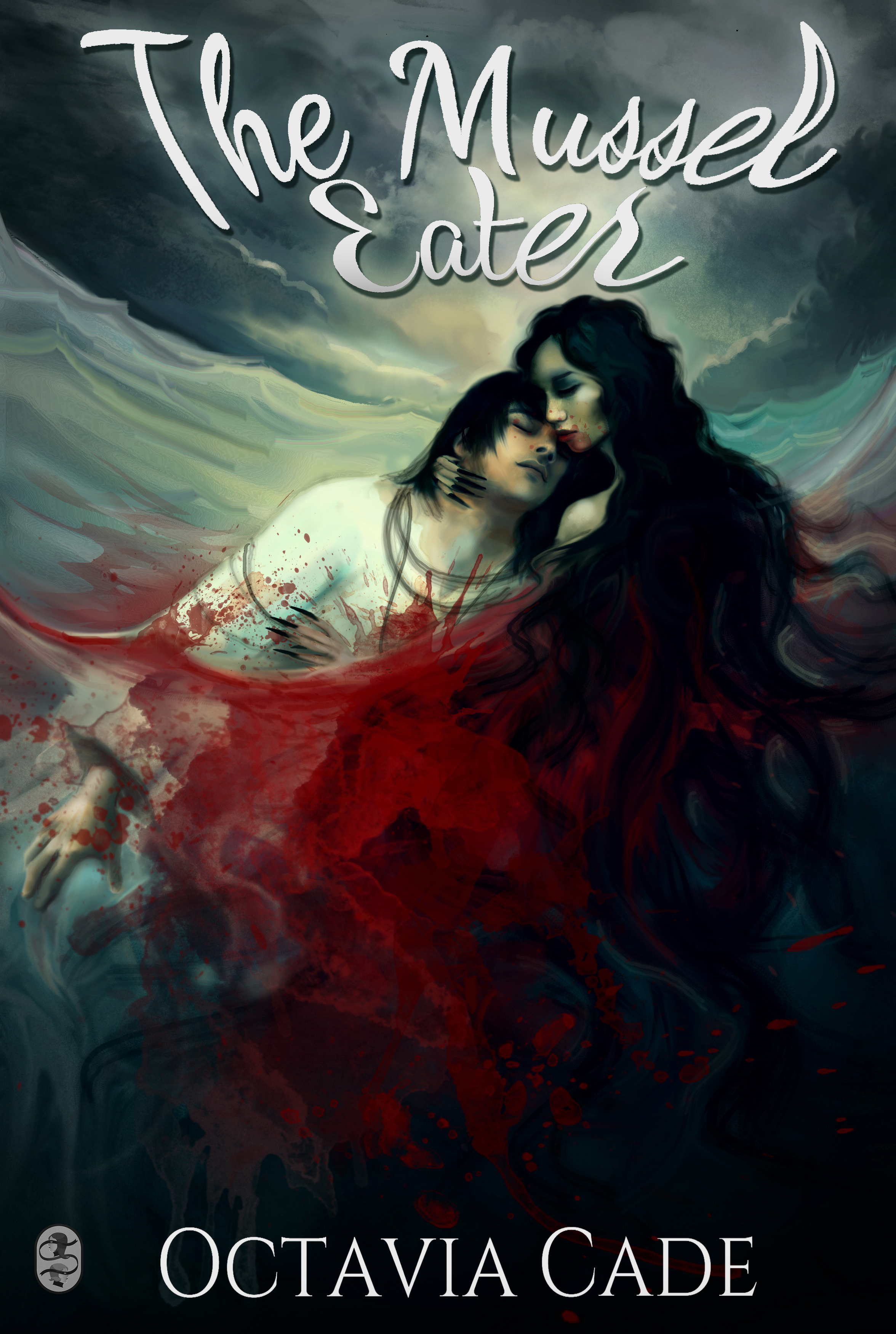
And seriously, it’s got the most amazing cover. That painting’s done by Kristina Tsenova and it’s beautiful. The claws! The colours! You should check out the rest of her work. She’s really very good.

Novellas, SFF

So You’ve Written A Mystical Pregnancy…

Vita Urbis - High ResolutionI know. I know.

They’re terrible. You think I haven’t seen them or read them and thought “What is this bullshit?” Granted, I don’t hate them as much as I hate the Magic Baby, Child of Prophecy, but then nothing comes close to the hate I have for that.

I mean, a woman’s more than an incubator, and it’s a sad fact that inflicting a character with a mystical pregnancy pretty much turns her into little more than a host organism victimised by her own capacity for reproduction. No choice, no agency.

So why did I feel the need to add another story to this pile of idiocy? I’ve just self-published my November novella, Vita Urbis, wherein the main character, Vita, gets knocked up by a city. Yes, roll your eyes, go ahead. I don’t blame you. I did as well, on the grounds of better late than never. See, this novella is based on a short story I wrote, published earlier this year in the urban fantasy anthology Twisted Boulevard. That was unadulterated mystical pregnancy for you, though my idiot self didn’t see it until far too late. Although the story was intercut with scenes from Ovid’s Metamorphoses, so transformation and some really twisted reproduction was par for the course. (Leda fucked a swan, for God’s sake. Say what you like about Vita, but at least she’s not out molesting the local wildlife.)

So I felt the need to do a fix-it job. Hence the novella – and if it makes matters worse then hell. It’s only a novella. I can always write another one.

To improve the expanded version I did three things. First, in the Ovid intercuts, I emphasised the themes of choice and agency. The novella is set around images of reflection – the stories mirror each other, the City with its own underworld, Vita reproducing through work and womb – so strengthening the metamorphoses helped to (hopefully) strengthen the whole.

Secondly, I gave Vita more choice… and made the City an active player in giving her that choice. For example, there’s a point where she considers abortion, and the same entity that got her pregnant in the first place makes it clear that it would support her if that’s what she wanted to do. It’s actually helpful about it. I’ve done things like this to try and return some agency to Vita, to make her more than a passive receptacle.

Finally, it’s the mirror effect again. Vita, in effect, knocks up the City before it lays so much as a smoky tendril on her. An architect, Vita reproduces herself in the buildings she designs, in a deliberate attempt to recreate the City in her own image. Little wonder the City wants to return the favour… Their relationship is mutually exploitative, especially as after the earthquakes that accompany Vita’s labour, her buildings might be the only things left standing.

So, I’ve written a mystical pregnancy. For the first and last time, probably. If it sounds like something you might be interested in, get yourself over to Amazon.

You can still roll your eyes if you want to.

Novellas, SFF

“The Life in Papers of Sofie K”

sofiekcoverMy new novella is out! My new novella is out!

The Life in Papers of Sofie K. is based on the life of Russian mathematician Sofia Kovalevskaya. It’s basically a literary/fantasy bio, maths meets magical realism. The premise comes from events in Sofie’s childhood – the poor kid had the most terrible Nanny. This cheerful woman apparently had a bent for macabre tales, and Sofie had life-long screaming nightmares about witches and werewolves and the Black Death. Now, I’m not a parent but I dare say if I had a small child I wouldn’t be tucking them into bed with stories about how people infected with bubonic plague were nailed inside houses that were subsequently set alight.

I mean, come on! Nanny dearest makes the Brothers Grimm look like fluffy bunnykins.

In my novella, Nanny’s nightmares come to life: Sofie is shadowed by a monster that is all her nightmares combined. But it’s not an enemy – it’s her shadow-self, sort of daemon and direwolf and Patronus, following Sofie through the universities of Europe. Because Sofie herself is also monstrous – or perceived as being so, with her enormous mathematical talent that allows her to break out of traditional gender roles and make her own way.

My last two novellas have been published by Masque Books, and Masque’s great. But this is too short for them, and I’ve been curious about self-publishing for a while now. I’ve a few more short novellas nearly ready to go that will probably end up the same way but Sofie K. is the first. Here’s a brief taster:

Sofie wants to study at the university at Berlin. This is not an easy thing: she lacks the parts preferred to do so, and the monster is no help. The professors do not want it in their libraries and their lecture rooms, with its thick soft paws and teeth that are too crescent for them, too light and lunar for comfort. Sofie cannot argue that they take the one without the other, cannot leave the monster at home. It is bound to her and will not leave, and she does not try to make it. If it were lost she would lose herself, so while she stops it from burying its teeth in those that thwart her, keeps it from poison and breaking and hammers, she does not leash or muzzle it.

Despite this, there is yet an avenue open to her: an appeal to the senate, a plea for scholarship. A chance for talent to rise above, to compensate for monstrosity. Sofie knows that she will need to sell herself, to walk the line between sty and nightmare, to look the part of a serious student. She holds herself as her father does, stiff-spined. She must appear more pig than monster, a curiosity in place of threat. Her shoes are sensible, rubbed clean of mud with thin lines of delicacy and they make a subdued clatter when she walks. An ugly bonnet makes her look older than she is. It shadows her mouth, and if Sofie ever had a tendency to simper then the bonnet does away with it, because she saw herself in mirrors before she came and this is not a hat to simper in. She does not wish to appear ridiculous.

(She knows some people will see her so anyway.)

The senate is unmoved. Talent is not enough for them–nor ability, nor enthusiasm. Even in clattery shoes she walks too lightly for them, has too much the whiff of monster. An aberration: something to be kept out with spells and salt and silver. They see only the bonnet (not how ugly it is, or the careful preparation behind it) and their fixed idea of women says that Sofie would be happier if she left maths well alone and circled millinery instead.

Anyway. If you want to read more you can find Sofie and her monster on Amazon. Check it out if it sounds like you!

SFF, Short stories

StarShipSofa: “The Mistress of Fishes”

SSS_SEPT_2014-500x647Now from the “Oops, I’m so behind!” file, comes some very late-breaking news. My short sci-fi story, “The Mistress of Fishes”, has been podcast by the good people over at StarShipSofa. You can listen to the very fine narration by Barbra Dillon here.

Now granted, I’m still quite new at this writing thing, but whenever anyone makes a comment to me about one of my short stories it’s generally this one. It seems to be quite popular, which is nice. Originally it appeared in Regeneration: New Zealand Speculative Fiction II, last year, when it also won a small prize at one of the sci-fi conventions. That prize being Terry Pratchett books, which is fantastic for me as I’m a big fan.

It’s one of several stories I have that focuses on or around the fishing industry in future New Zealand.  Two other of these stories are due out soon from The Book Smugglers and Apex Magazine, and I’m currently writing up another on seaweed. Mostly to help encourage myself to finally finish and submit that paper I have on algae that’s been 90% done for some years now…

Novellas, SFF

The Don’t Girls

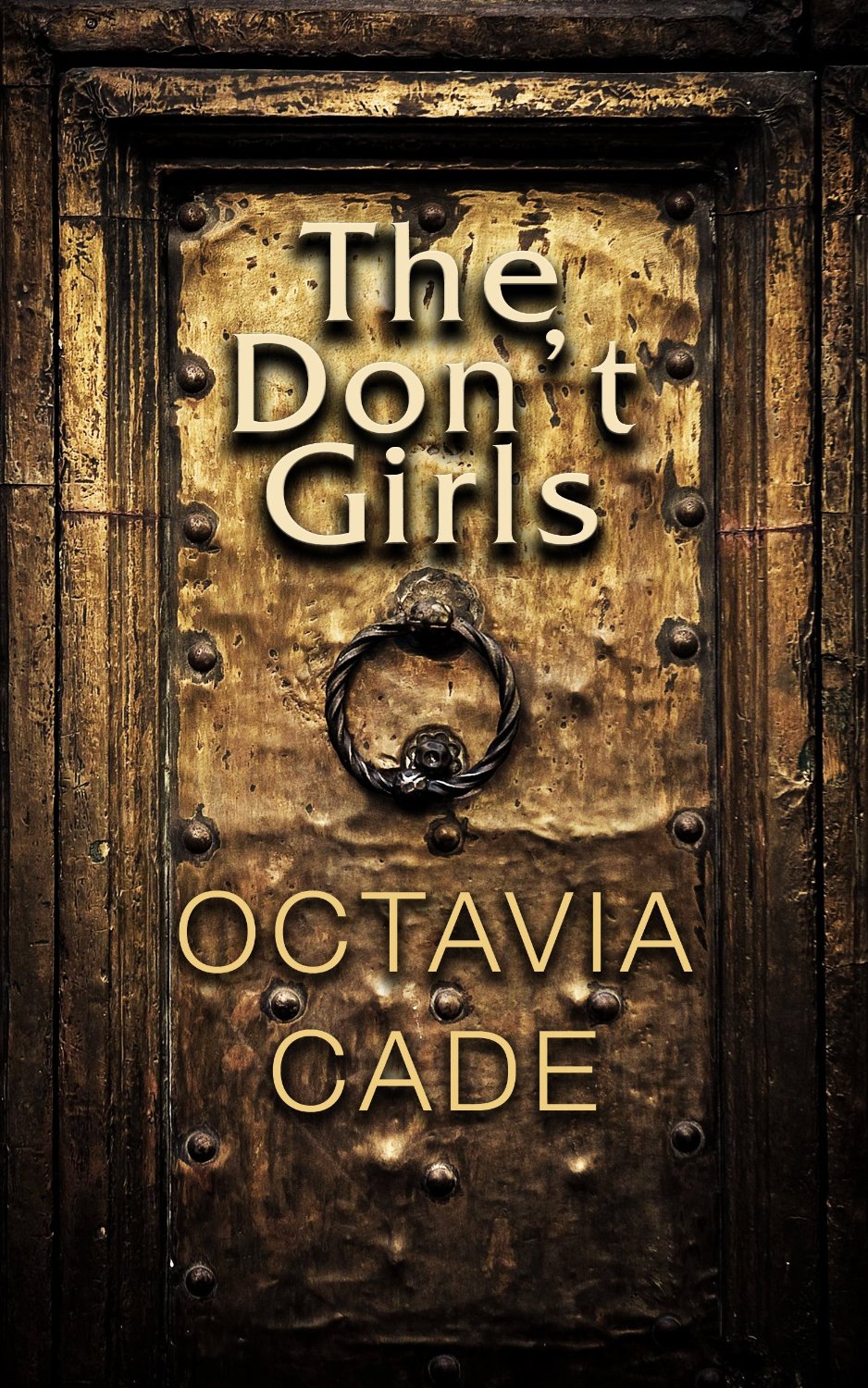
The Don't GirlsMy second novella’s out, and it’s way different to the first. I suppose you’d call The Don’t Girls urban fantasy, with a feminist bent.

It started out as a short story (now the first chapter), wherein Bluebeard’s wife met up with Pandora and her box, and decided to take care of her murderous husband before he did to her what he’d done to all his previous wives. And this was all well and good, but then I gave it to my sister to read. She liked it – not surprising, our tastes are quite similar – but then she said “OJ, it reads like it should be longer.” And I thought bugger it, because I thought it was done and over with and maybe it wasn’t.

So, obliging girl that I am, I started writing. I had no clue as to story, and nothing was written in order. Instead the fragments came together on their own, and they did so very easily – as if I’d already decided what I was going to say. There was Anne of Cleves, for instance, fitting in like she was made for the story, as if I hadn’t started scaffolding around her in a quest to build a story of, well, something anyway. All I knew was that The Don’t Girls was going to be about women. Some were historical (Anne, Ada Wilson, Mary Prince, Nell Gwynn, Edith Cavell). Others came out of story (Bluebeard’s wife, Pandora, Mab the Queen of Fairies) and one was entirely made up because she came from the future and, unlike Pandora, I don’t have a magical time-tripping box.

Shame.

Anyway, Masque Books published it, and The Don’t Girls is now available at Amazon, Scribd

Locus review.